
Material innovation, product research, and contemporary craftsmanship
At Milano Design Week 2026, ATLANTE Design brands presented a curated selection of projects that articulate a precise vision: product as a strategic interface between material research and spatial application.
Across the portfolio, brands engaged with matter as both medium and message—exploring surfaces, processes, and typologies that extend beyond function to shape narratives and architectural experiences.
The result is a cohesive yet diverse landscape where craftsmanship, experimentation, and design intelligence converge into objects conceived not just to exist, but to activate the spaces they inhabit.
De Marchi Verona — Porcelain as Architectural Language
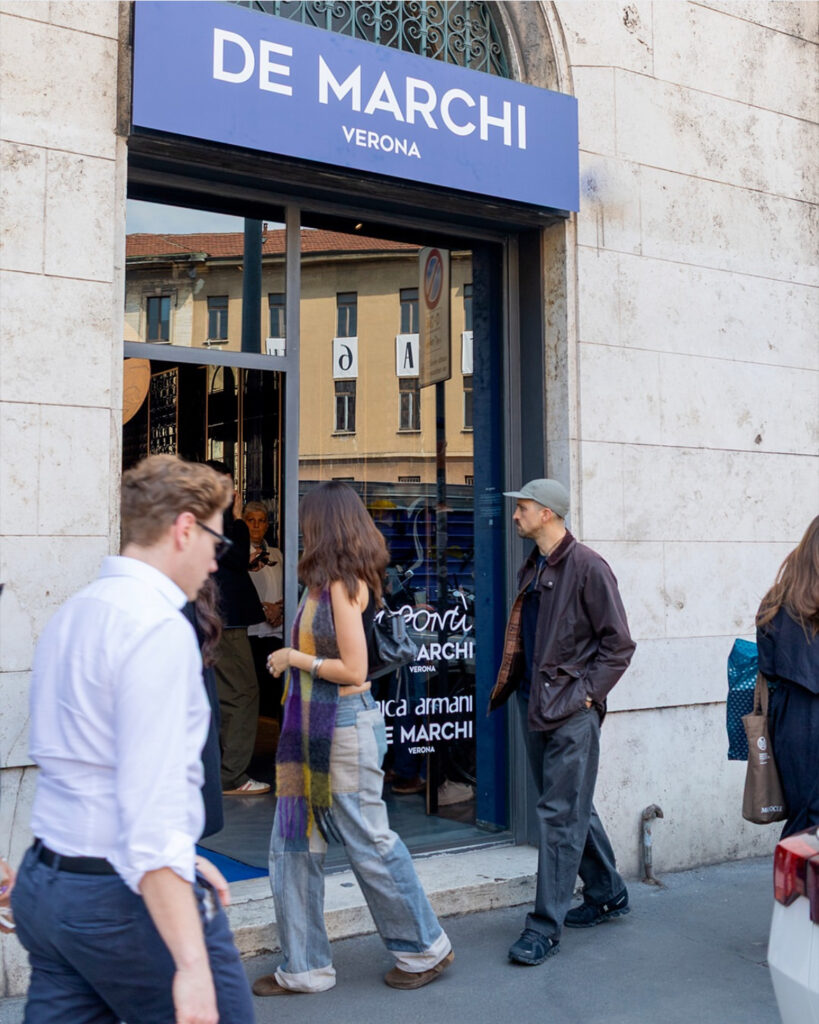
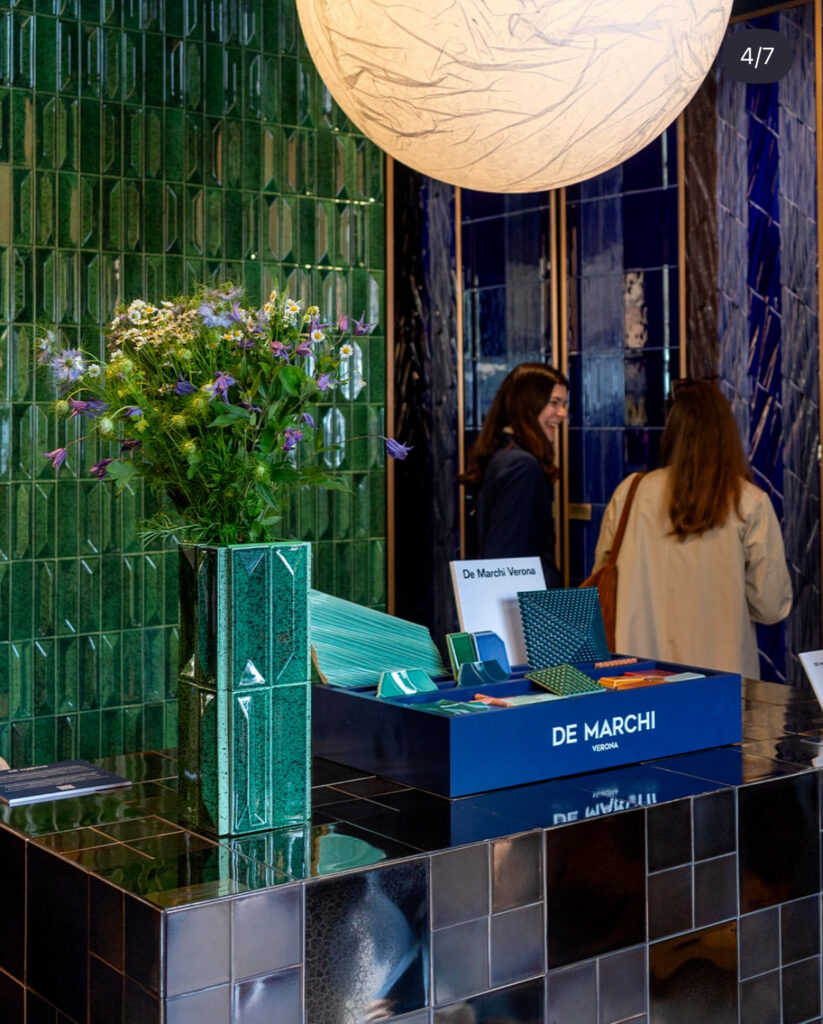
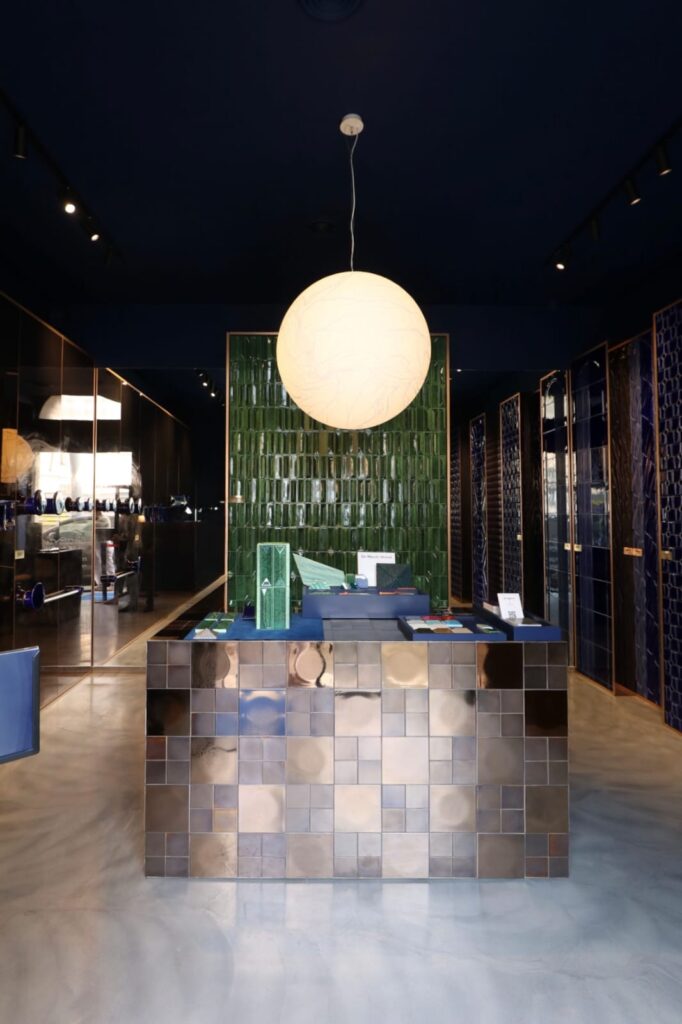
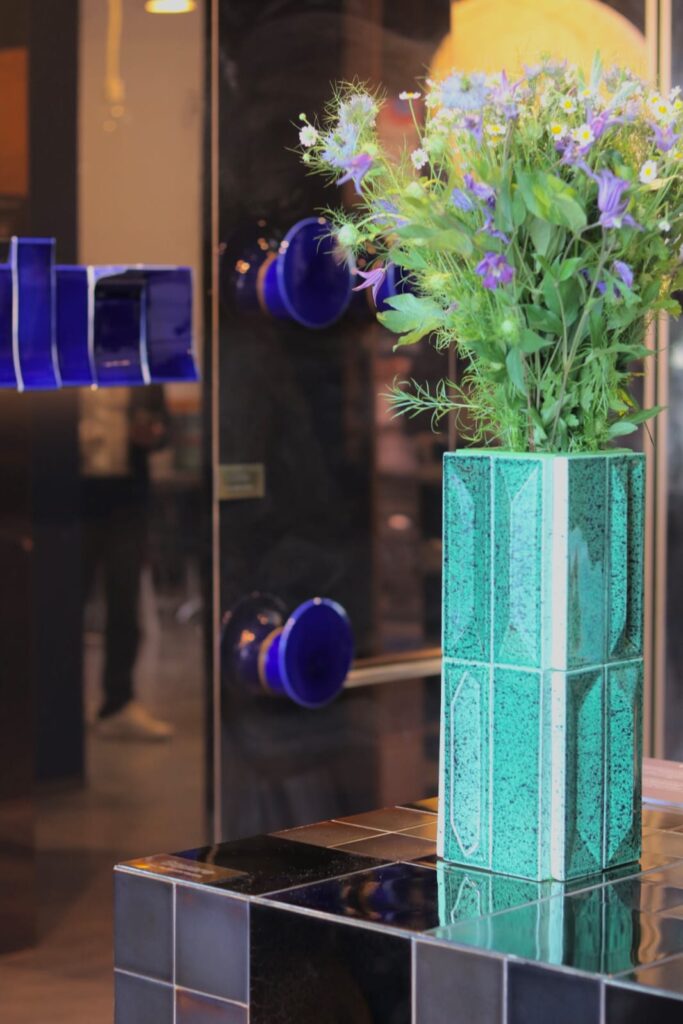
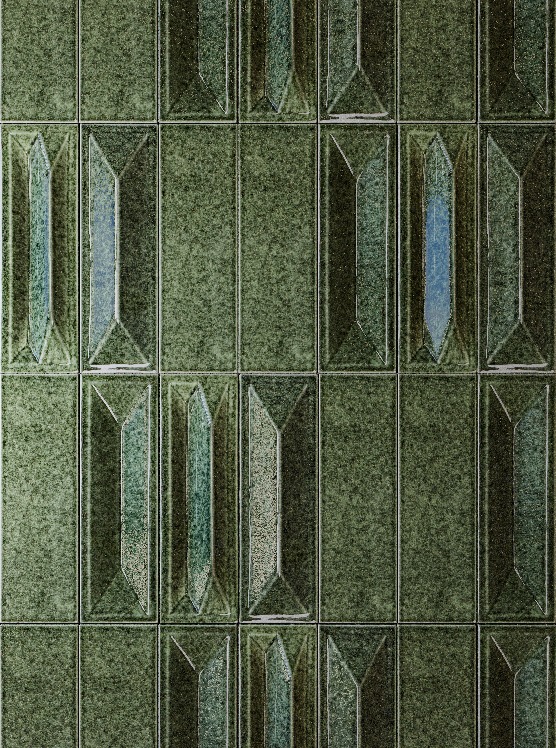
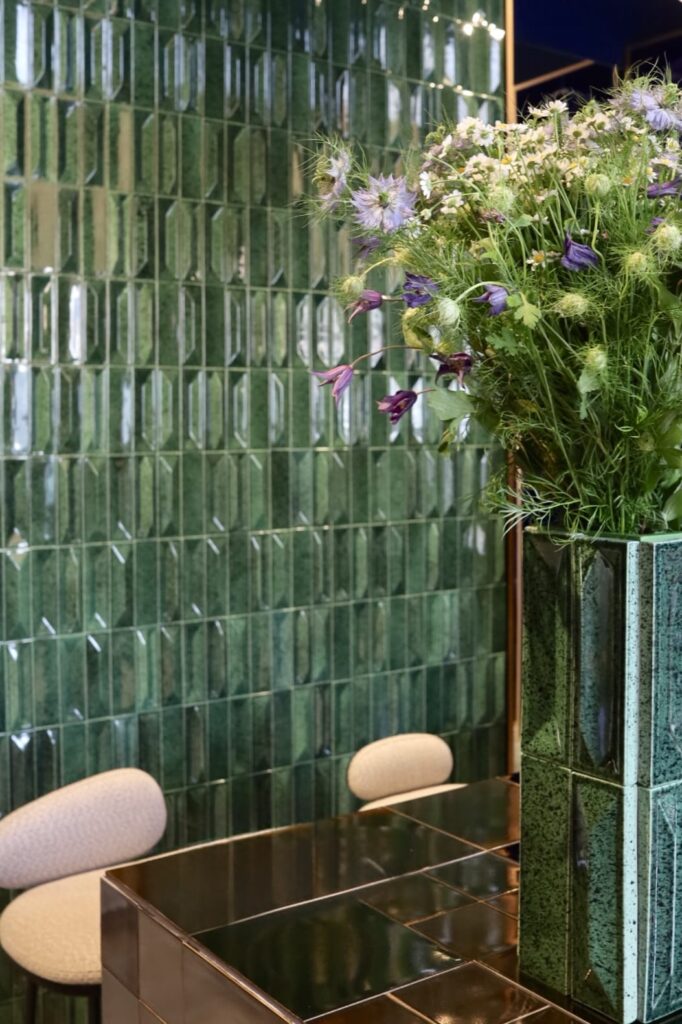
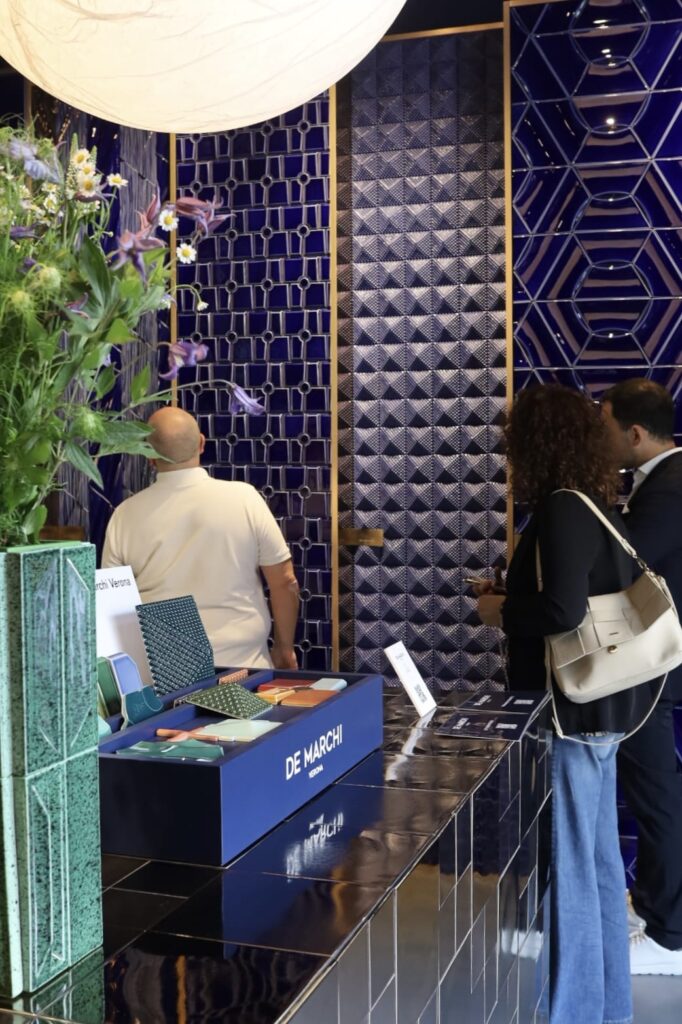
De Marchi Verona advanced its exploration of porcelain as a structural and expressive component within architecture. Presented in a temporary space in Brera, the brand articulated two complementary directions: one rooted in heritage, the other in contemporary experimentation.
On one side, the re-edition of the Montedoria project, developed in collaboration with Fondazione Gio Ponti, reactivates a historic system through updated technical performance and refined detailing. More than a revival, the project operates as a translation—bringing a modernist vision into present-day architectural contexts while preserving its conceptual integrity.
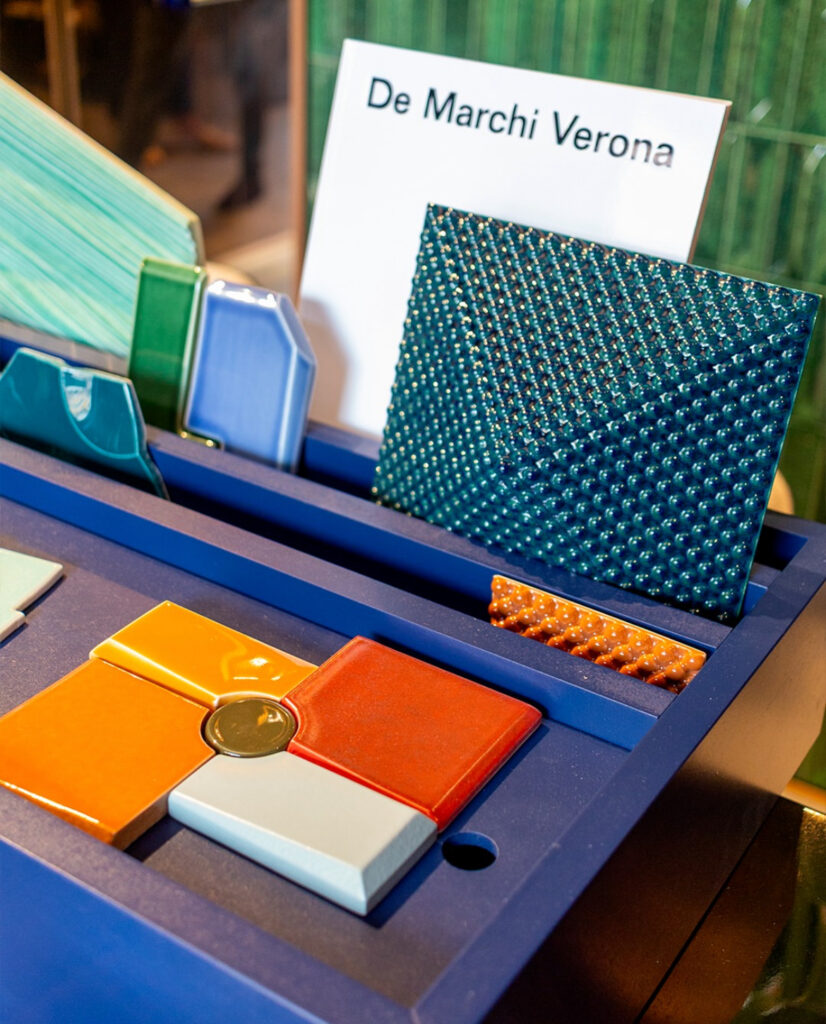
In parallel, new collections by Monica Armani investigate porcelain as a medium to shape light, rhythm, and perception. Here, surfaces evolve beyond their traditional role to become active spatial devices—elements that interact with their surroundings, modulating depth, reflection, and atmosphere.
Together, these two trajectories define a coherent positioning: porcelain not as cladding, but as architectural language—capable of structuring space, conveying identity, and bridging past and present through material intelligence.
Dante Negro — Craft as a Living System
Dante Negro presented a coherent body of work where craftsmanship is not positioned as heritage, but as an evolving design methodology.
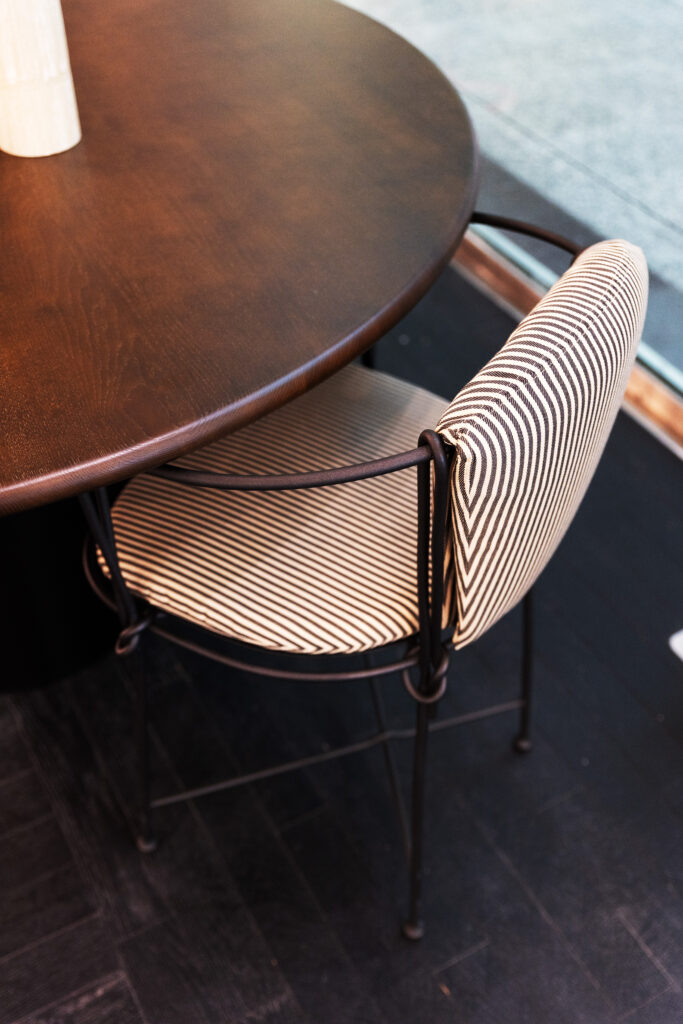
At the center of this exploration is the Corda collection, developed within Crafting Forward, a project by Zanellato/Bortotto for Valcucine.
The collection is defined by hand-forged metal nodes—each piece shaped over hours—where the gesture of making remains visible. The result is a system of elements that merges artisanal time with a forward-looking approach to material experimentation, expanding the expressive potential of metal.
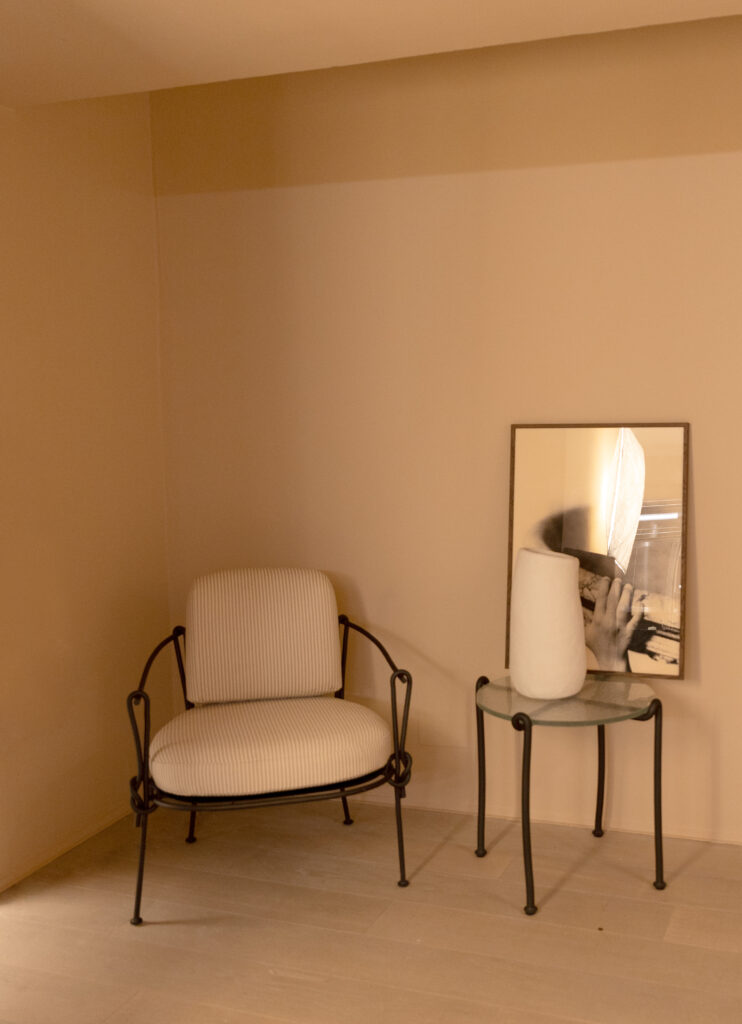
This same logic extends into the Dolmen collection, designed by Margherita Rui.
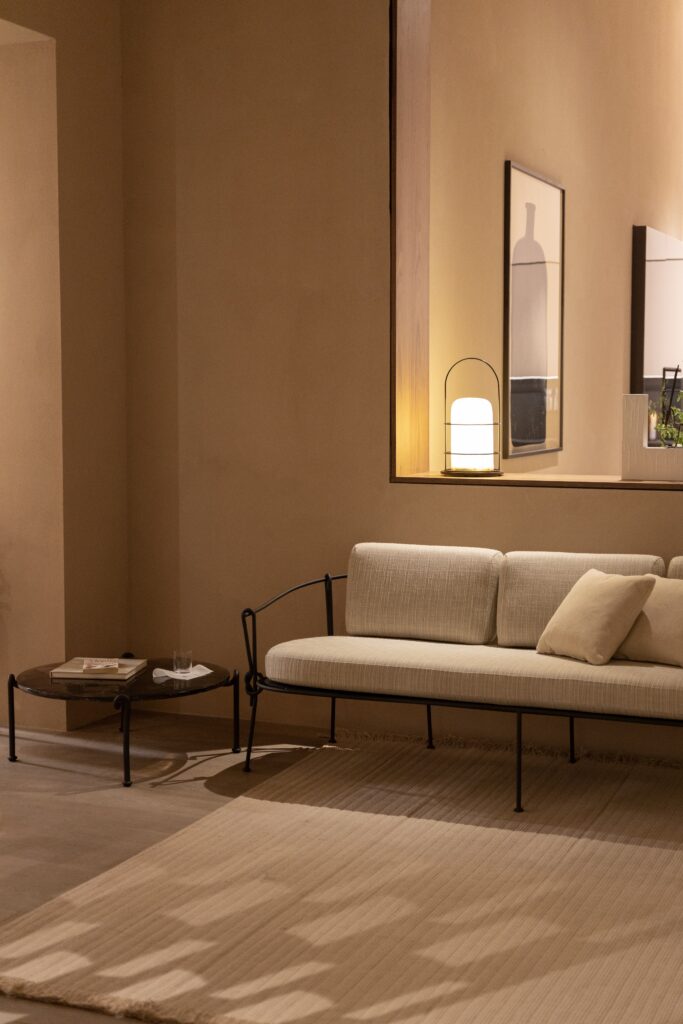
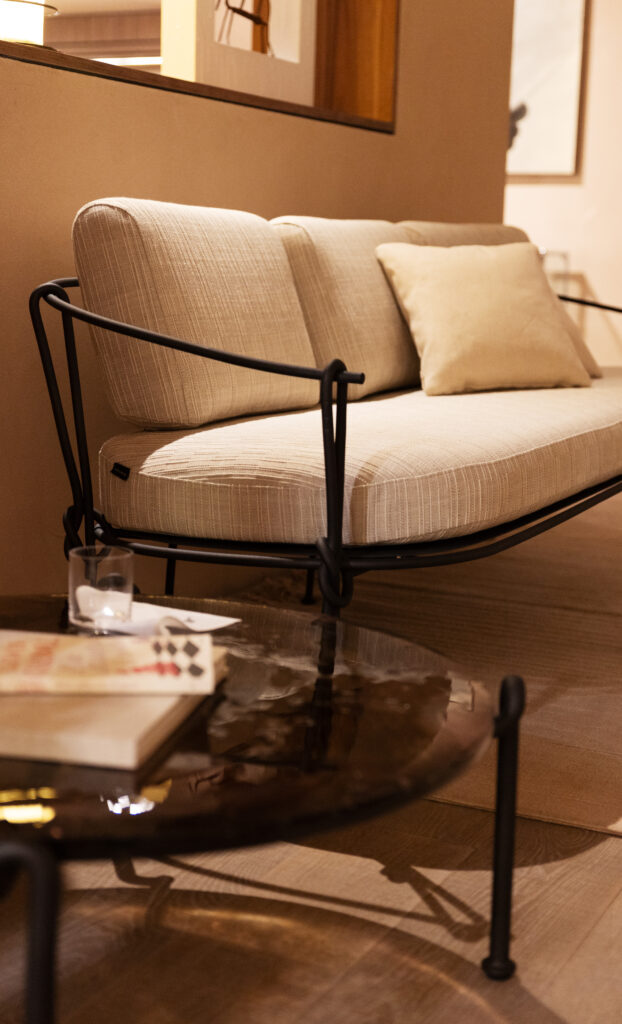
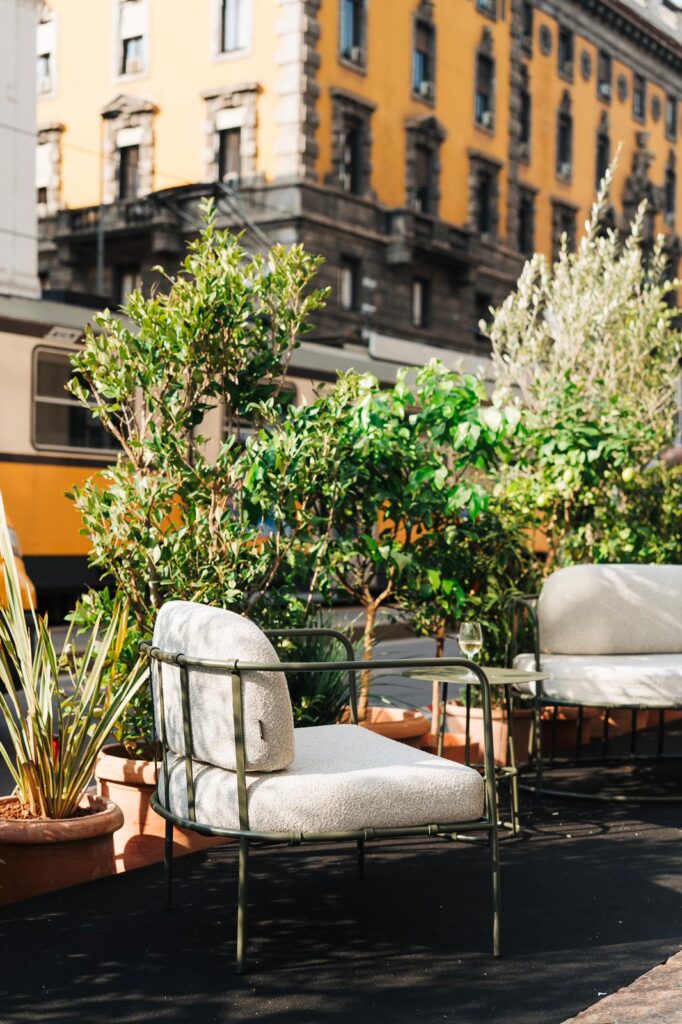
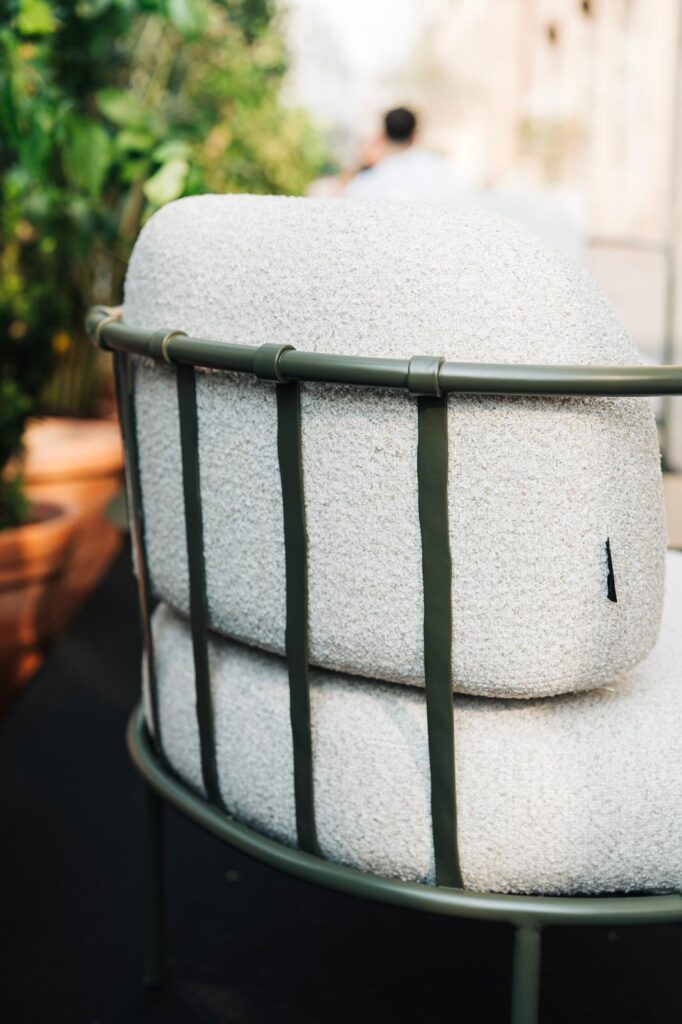
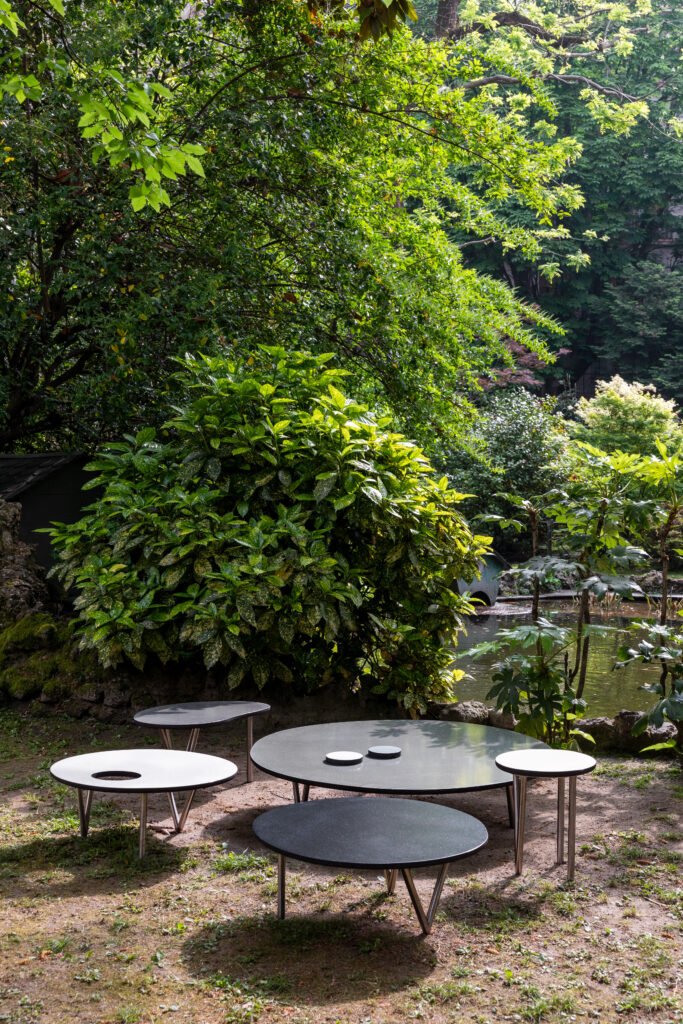
Comprising armchairs and coffee tables, Dolmen translates wrought iron into architectural forms—solid yet permeable, structured yet open. The pieces are conceived to define space through presence, creating a continuity between interior and exterior environments.
Alongside this, the Type collection, designed by Stormo Studio, introduces a more modular and rhythmic language. Coffee tables become compositional units, where proportion and repetition generate a flexible system adaptable to different spatial configurations.
The material narrative is further reinforced through the Heritage collections (Galleria and Amarcord), where surface treatment and CMF direction emphasize the tactile and visual depth of wrought iron. Finishes are not decorative layers, but integral to the identity of each piece.
Across all collections, Dante Negro defines a precise positioning: metal is not treated as a fixed material, but as a dynamic medium—capable of carrying the trace of manual processes while opening to new formal and functional interpretations.
A continuous dialogue between craft and design, where each object becomes both structure and story.
Ninefifty — Lava Stone and Terracotta Reinterpreted
Ninefifty’s presentation articulated a coherent exploration of terracotta and lava stone as a contemporary design medium—where material research, surface treatment, and geometry converge into a precise product language.
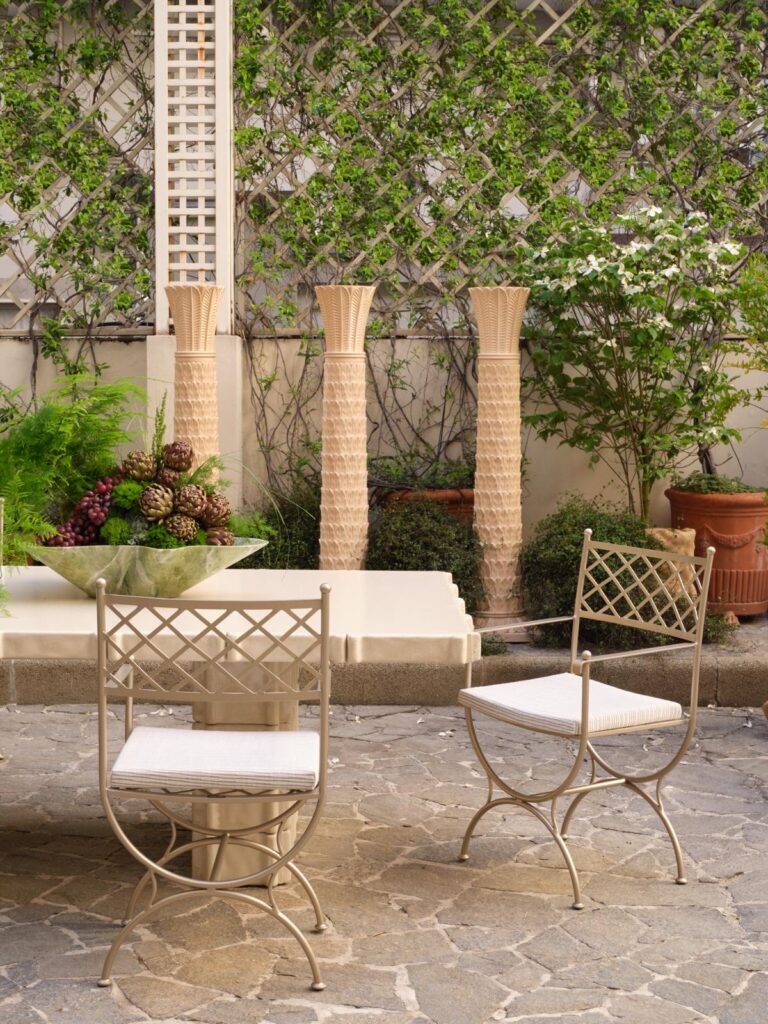
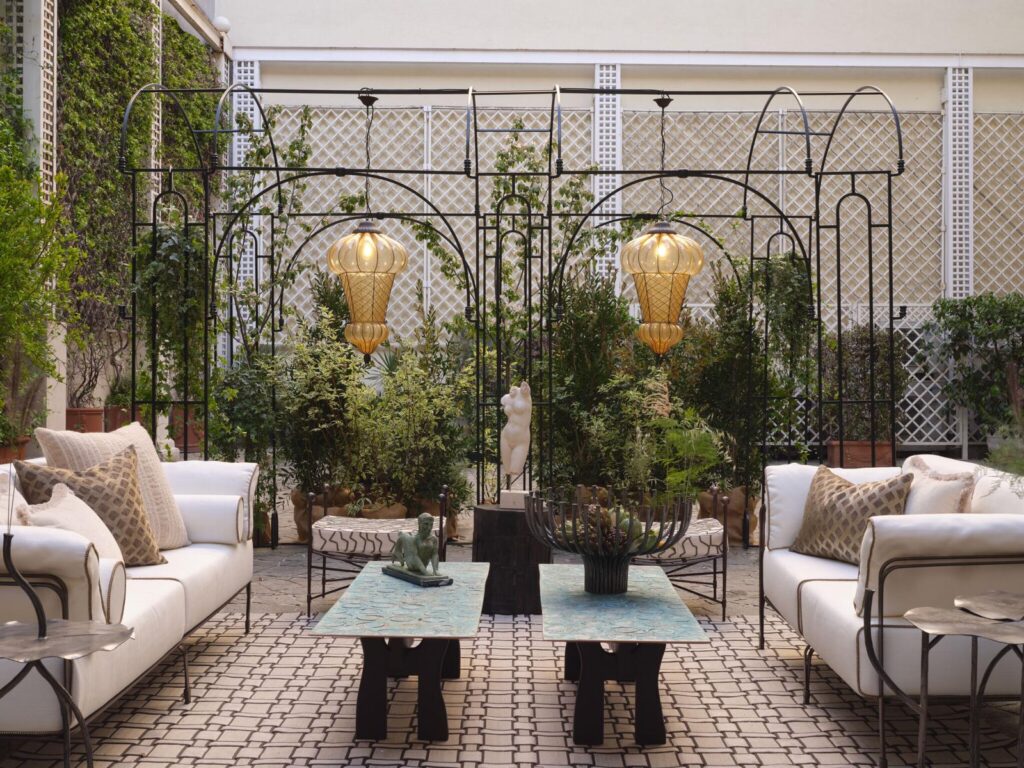
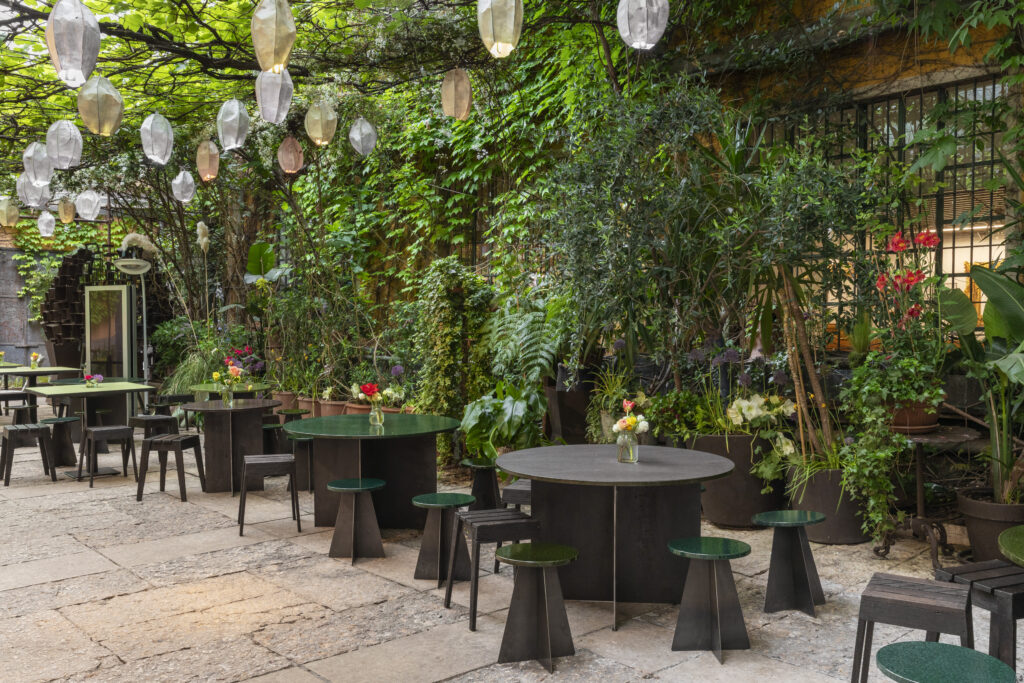
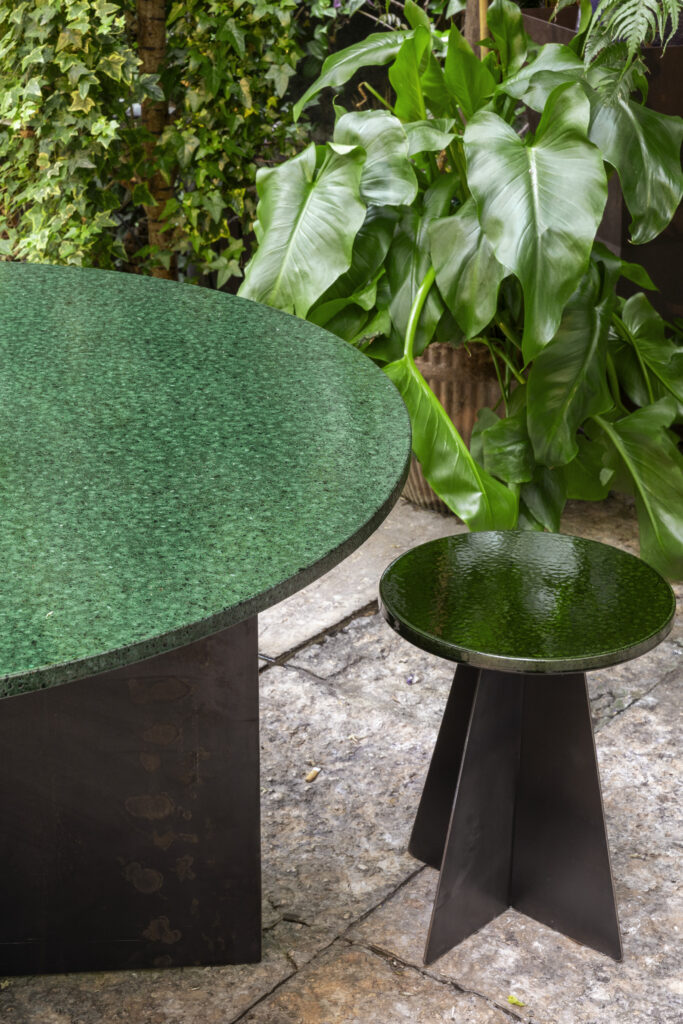
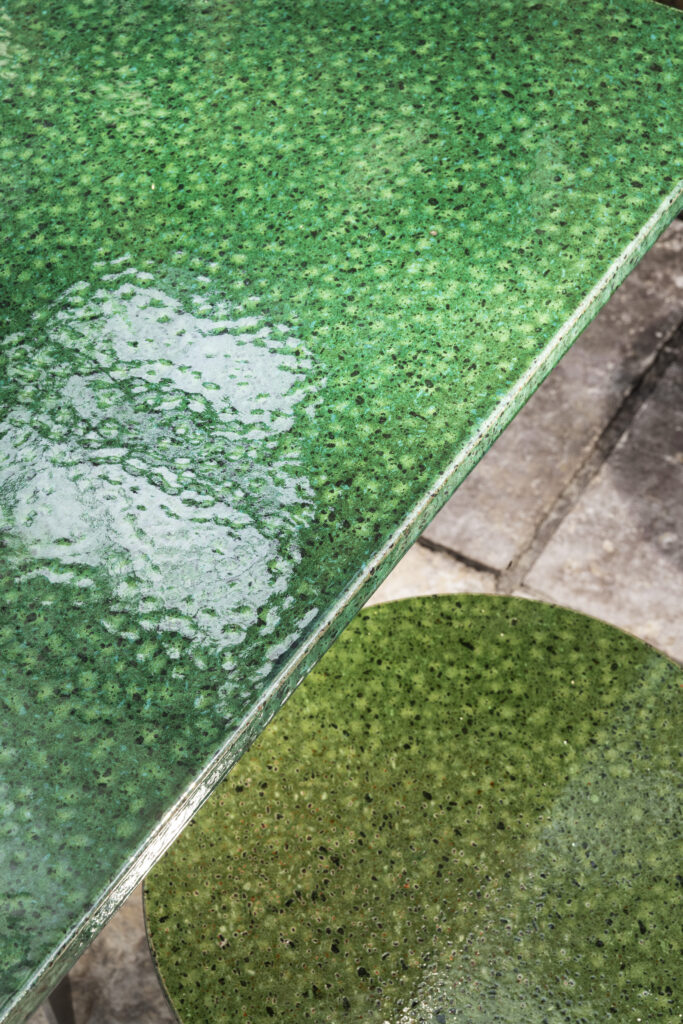
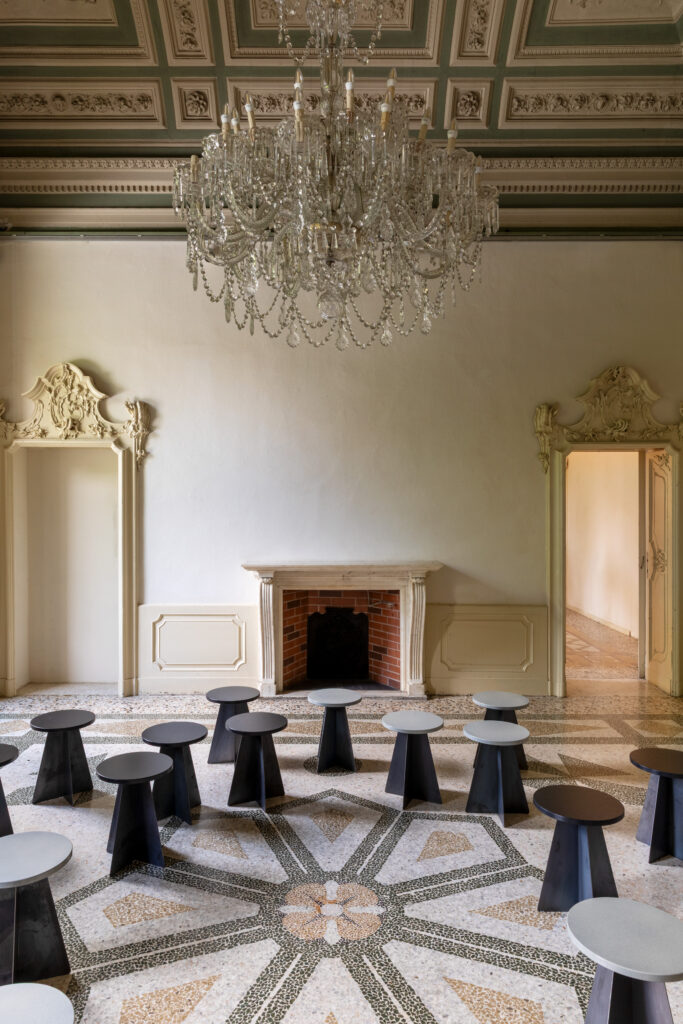
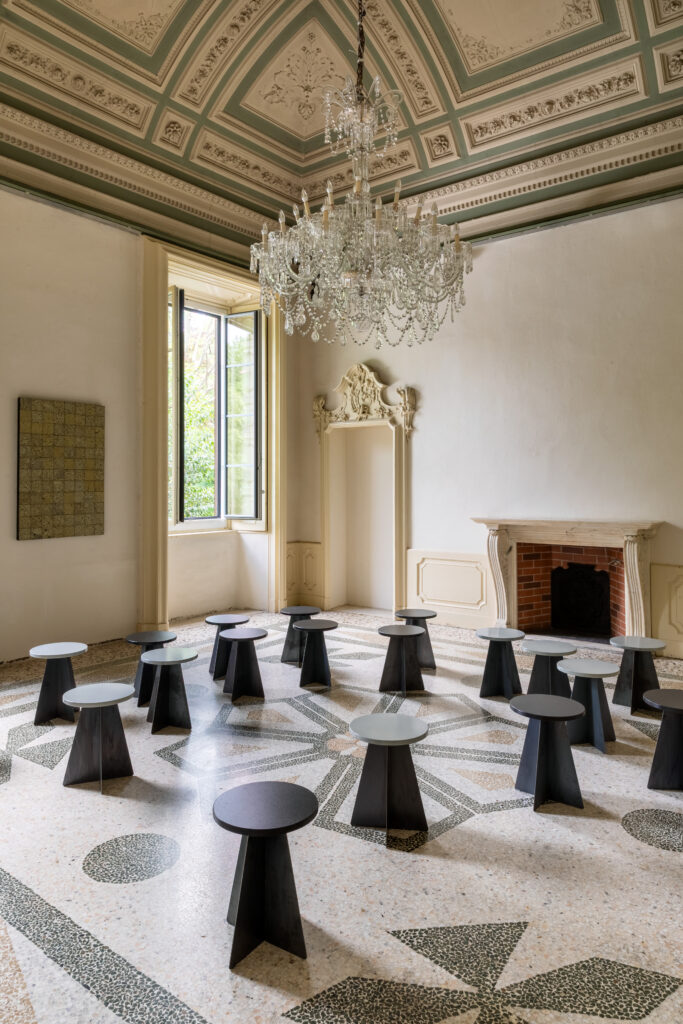
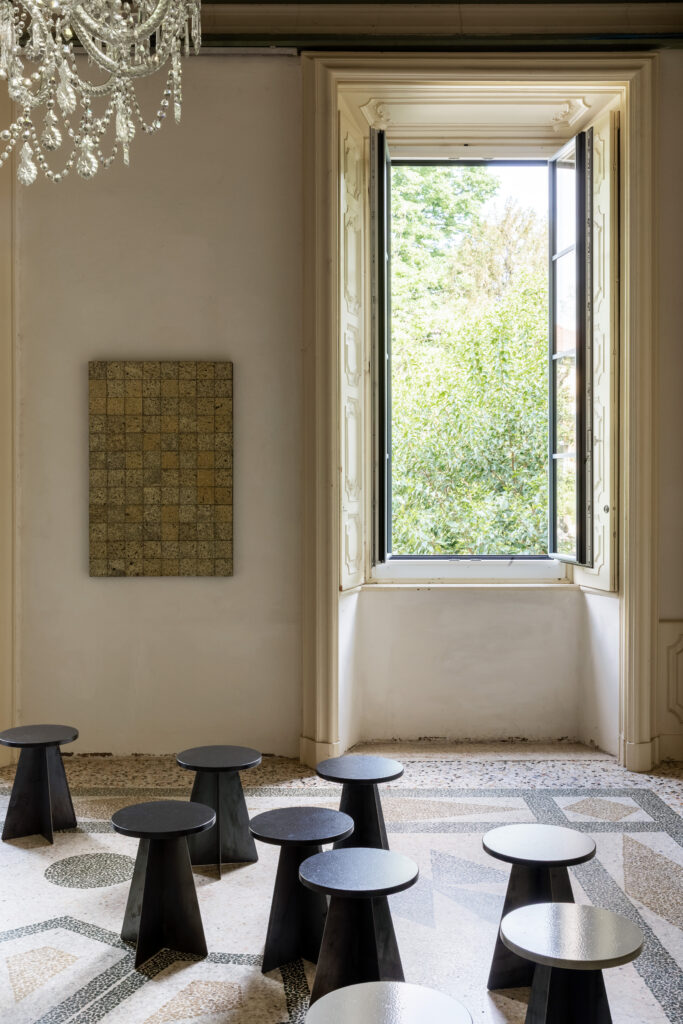
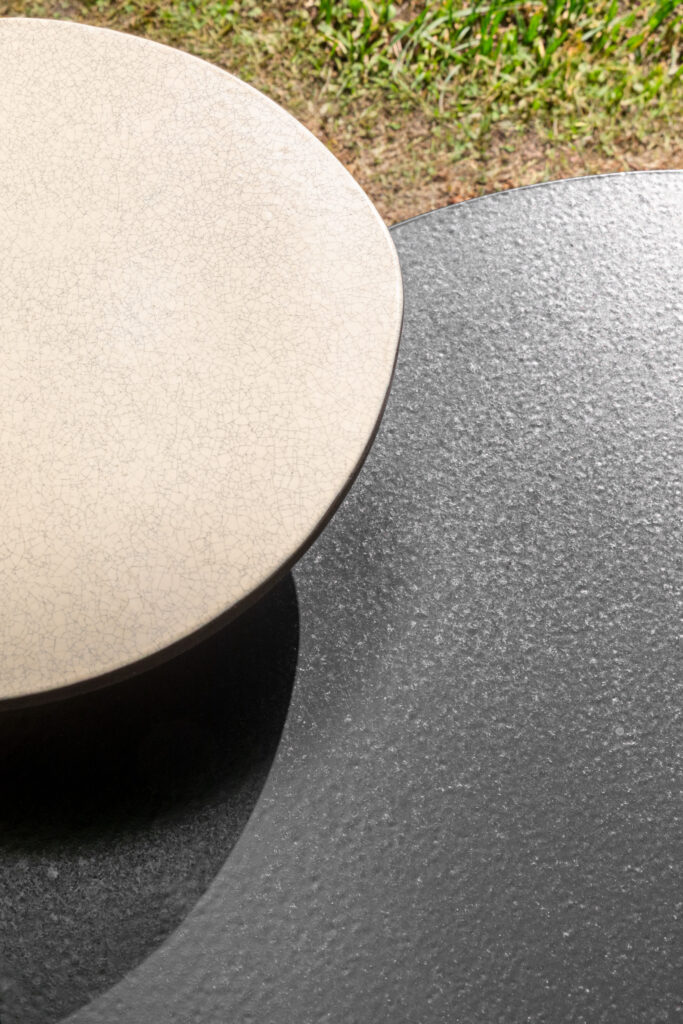
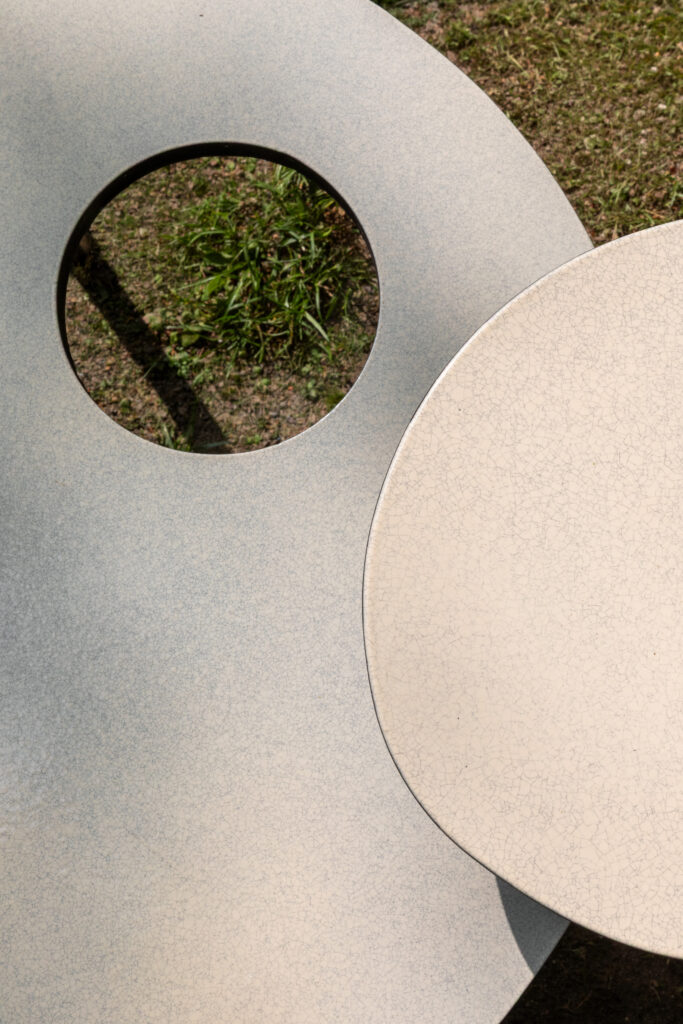
At the core of this narrative is Greensleeves, the installation by Elisa Ossino: a system of tables and stools that transforms Etna stone through a vitreous skin. The application of high-silica glazes generates a translucent layer that reveals, rather than conceals, the porosity of the volcanic material. A palette of greens—derived from copper oxide reactions—introduces chromatic depth, with iridescent reflections that shift with natural light. The result is a collection where mineral density meets optical lightness.
This same tension between weight and perception continues in Xyphonia, a series of stools also designed by Elisa Ossino. Here, geometry becomes stricter, almost archetypal. The lava stone seats—treated with stippled glazing—rest on laser-cut iron bases, reduced to an essential graphic sign. The contrast defines the product: mass elevated into visual lightness, matter disciplined through form.
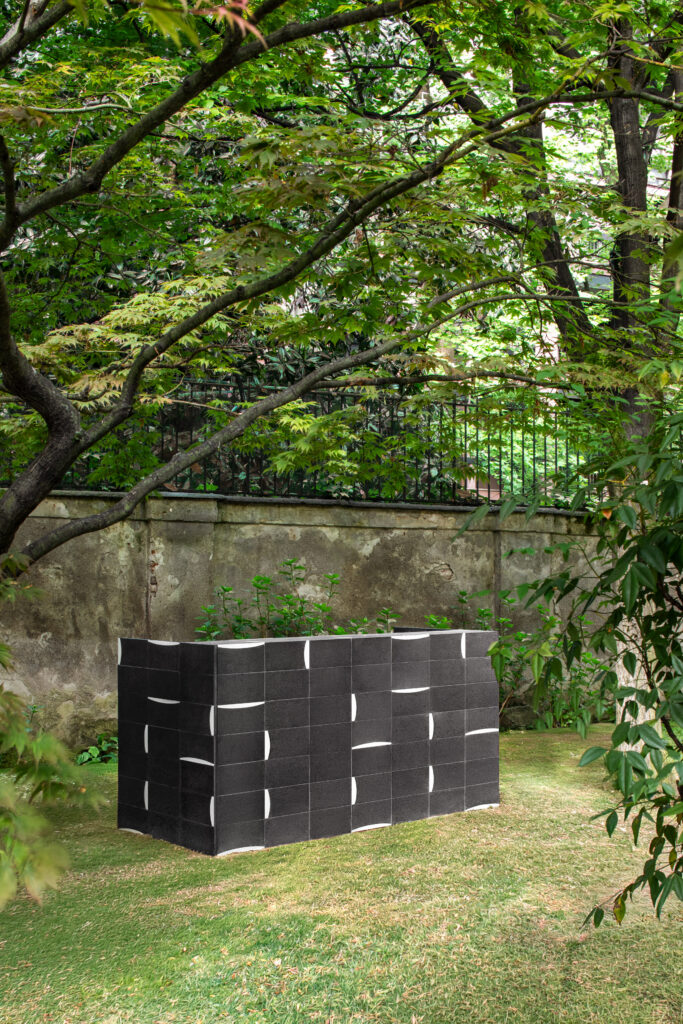
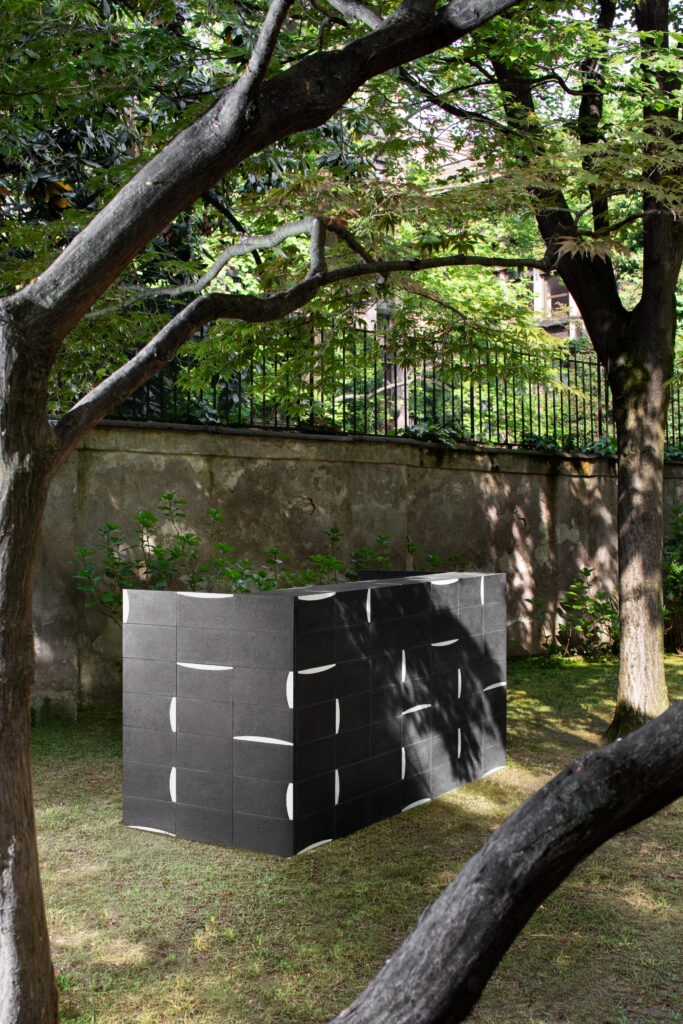
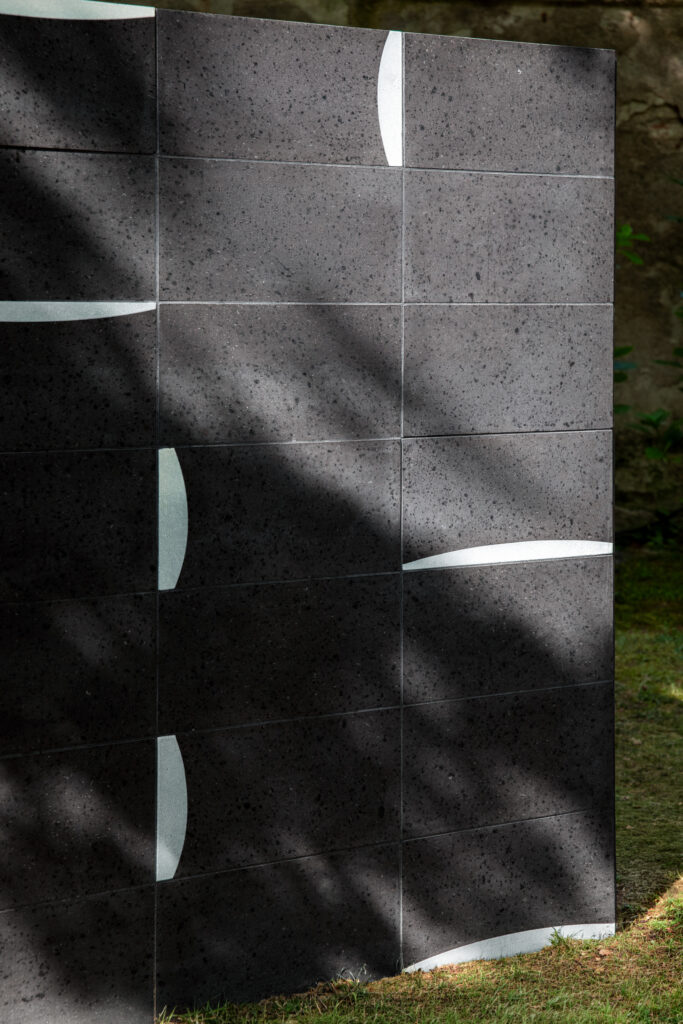
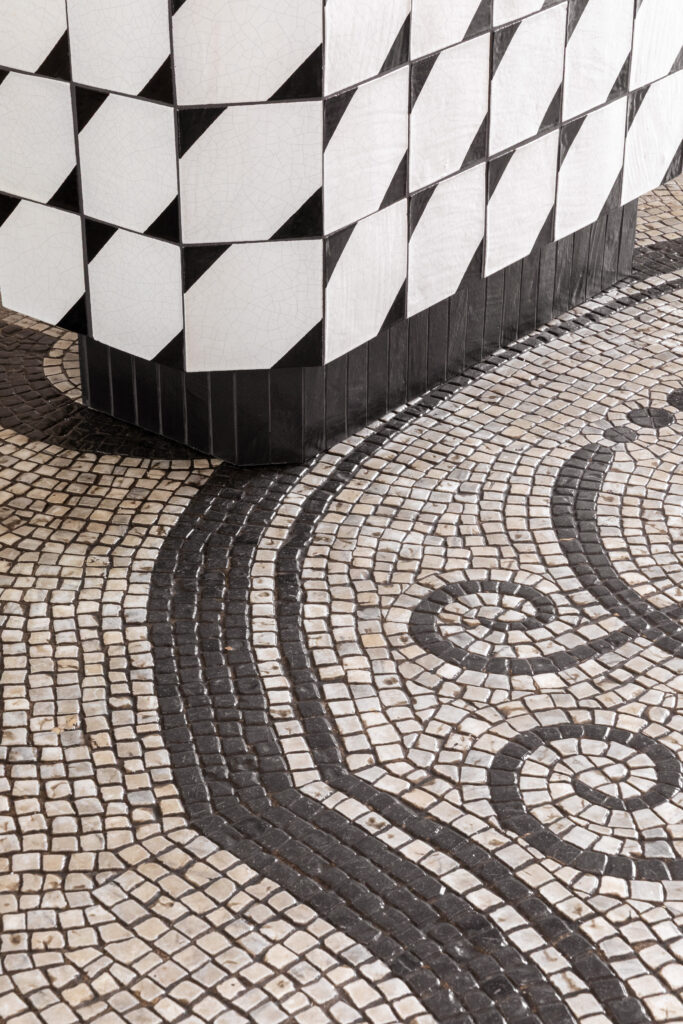
Alongside this, Inversi, designed by Margherita Rui, introduces a modular system of lava stone tiles built on the interaction of opposites. Black and white modules develop through subtraction, generating patterns that balance positive and negative space. Rooted in the artisanal traditions of Caltagirone—cutting, natural drying, hand-applied glazing—the collection operates as an open system, allowing continuous compositions across surfaces and contexts.
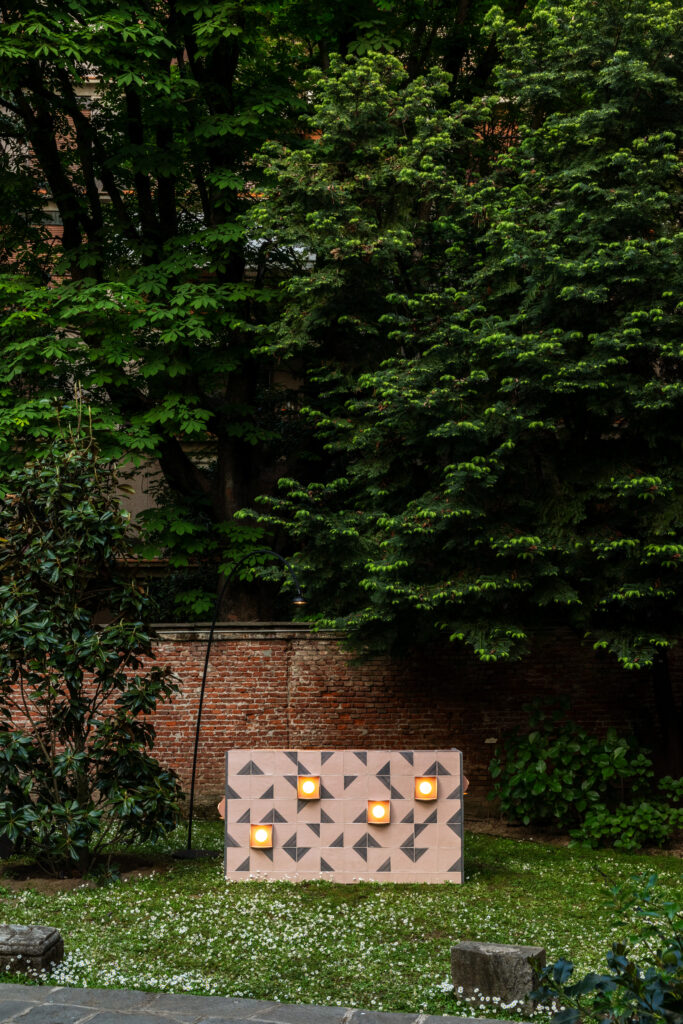
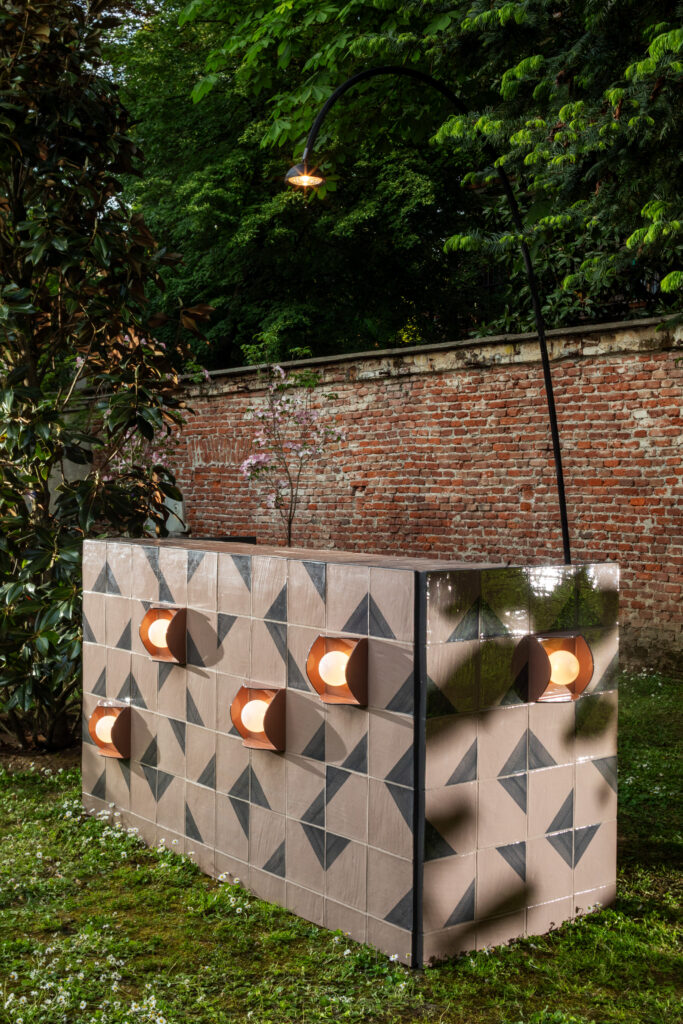
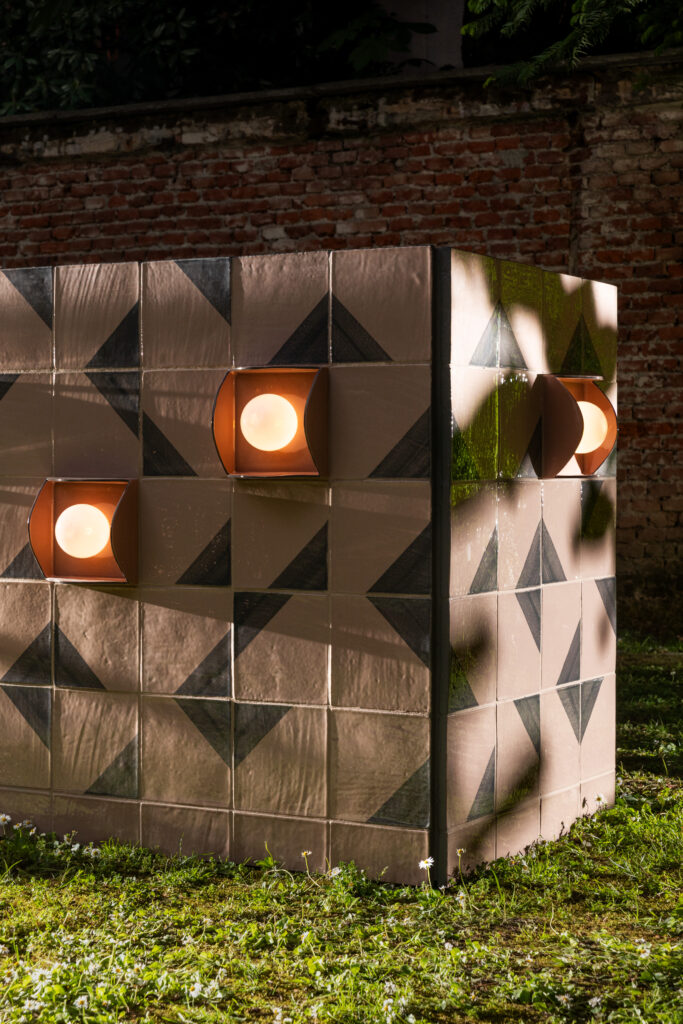
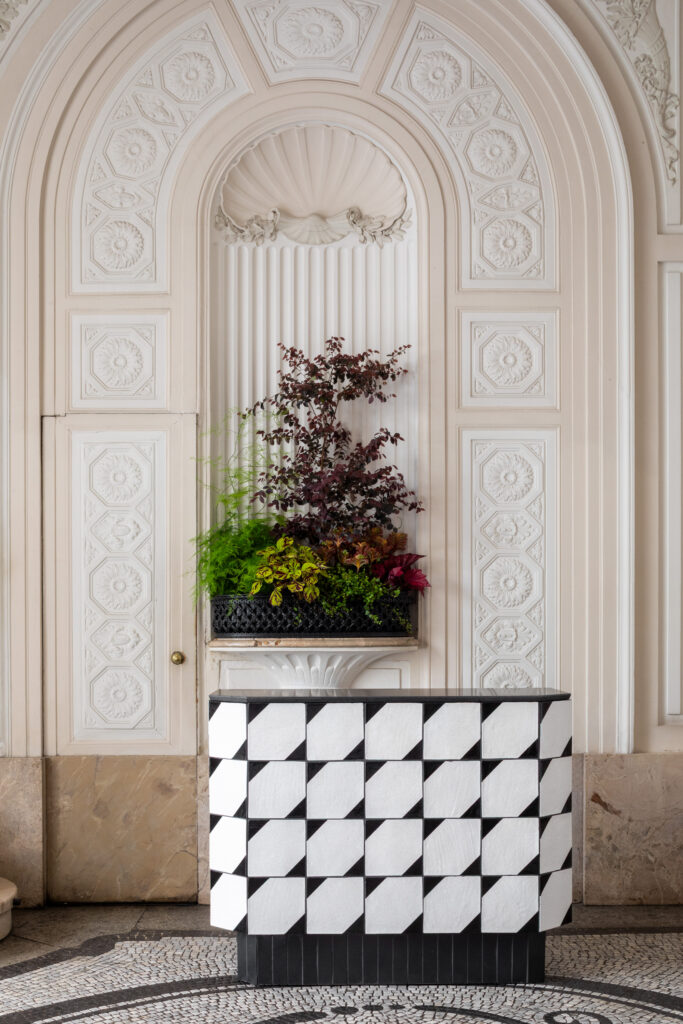
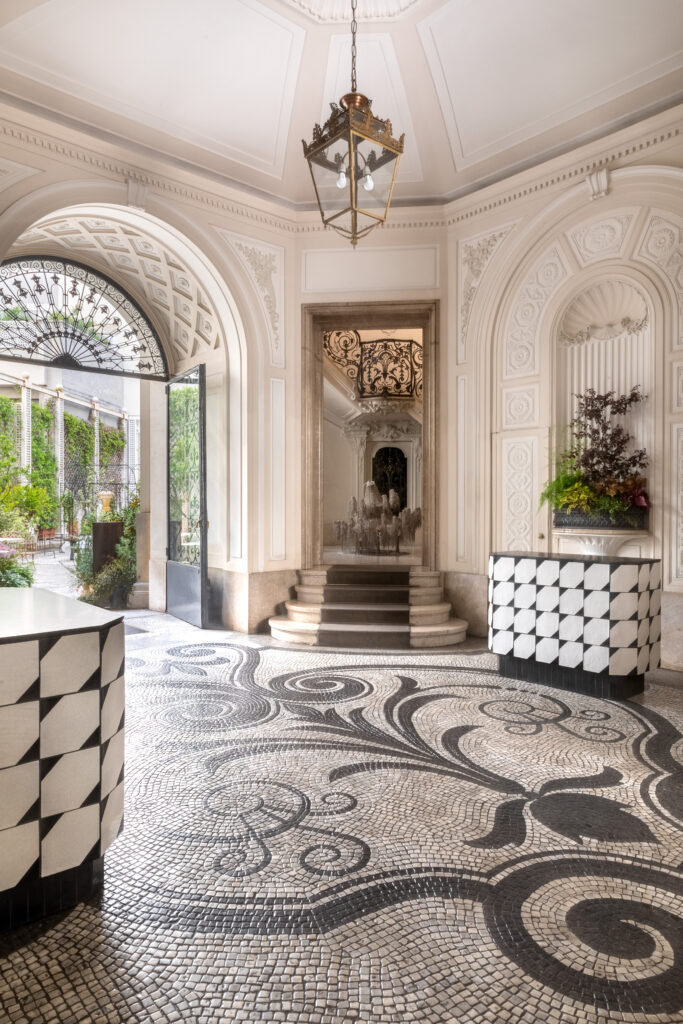
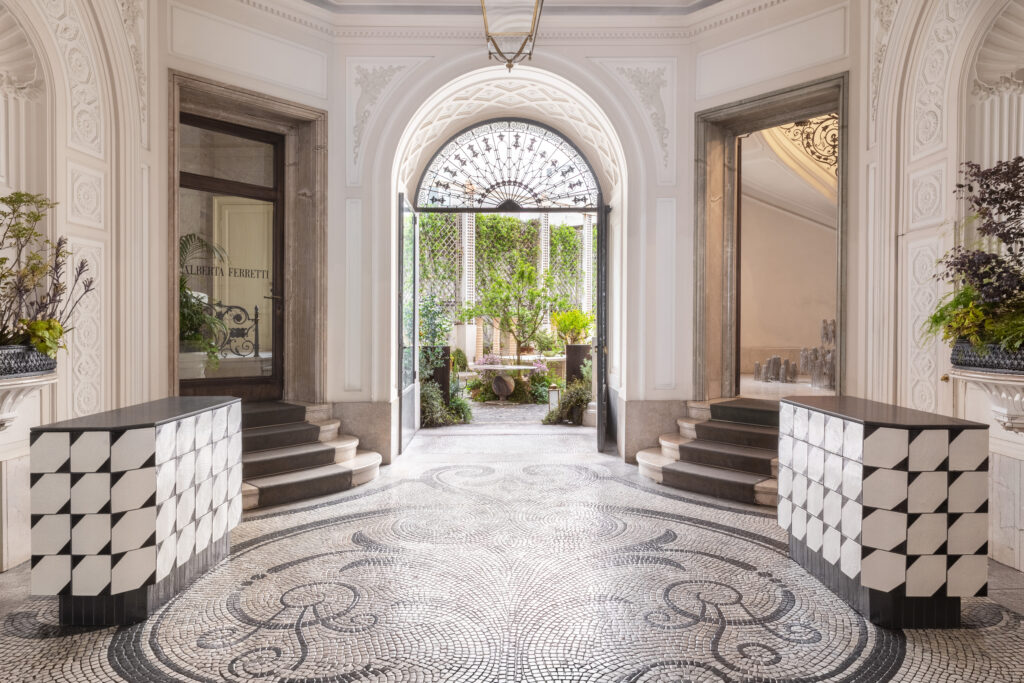
A more architectural and spatial dimension emerges with the Balera Console, designed by Studiotamat and Arianna De Luca. Combining a lava stone top with glazed terracotta cladding, the piece introduces Bussola, a black-and-white collection inspired by the iconic Italian nightclub culture. Compact yet expressive, the console reinterprets the language of DJ booths—transforming a functional object into a social activator within space.
Across all collections, Ninefifty defines a clear direction: transforming lava stone from a traditionally heavy, opaque material into a versatile, luminous, and narrative surface. Through craftsmanship, chemical research, and formal rigor, each product becomes a unique interface between nature and design—where no piece is ever identical, and variation is embedded as value.
This body of work positions Ninefifty not simply as a producer of surfaces, but as a system-builder—capable of translating material heritage into adaptable, contemporary applications for architecture and interior design.
Giorgio Bena — Expanding Beyond Steel
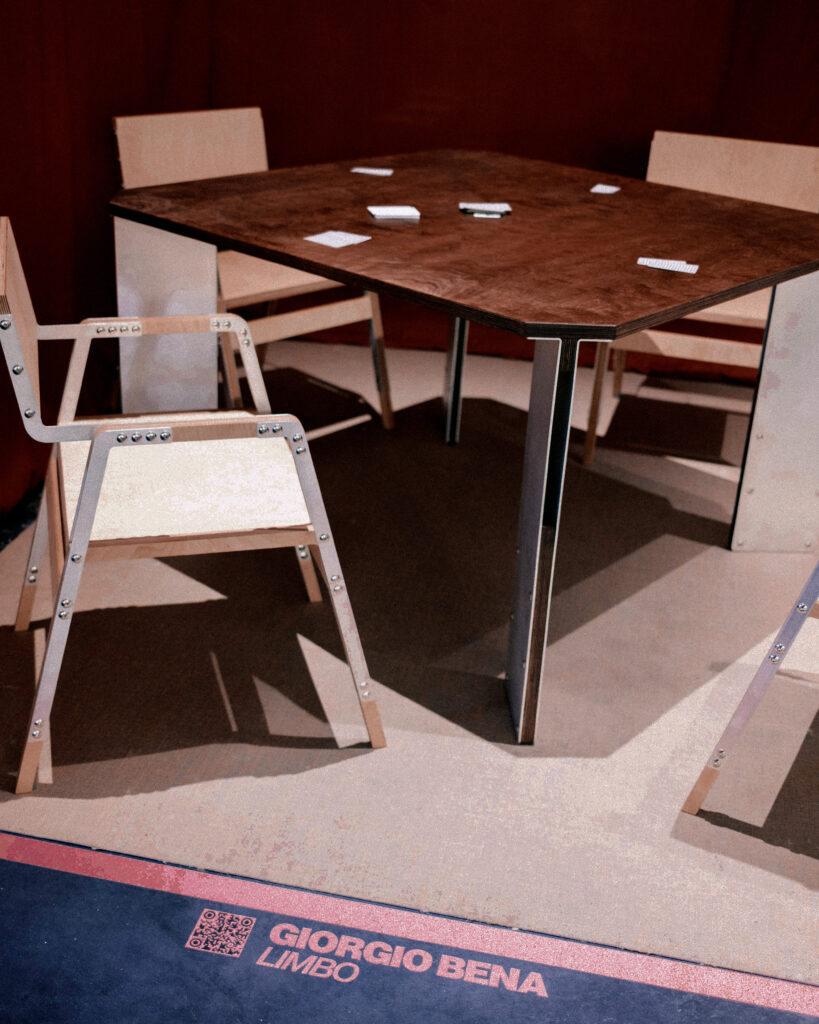
For Milan Design Week 2026, Giorgio Bena presented Limbo, a new body of work that marks a clear evolution in his design language.
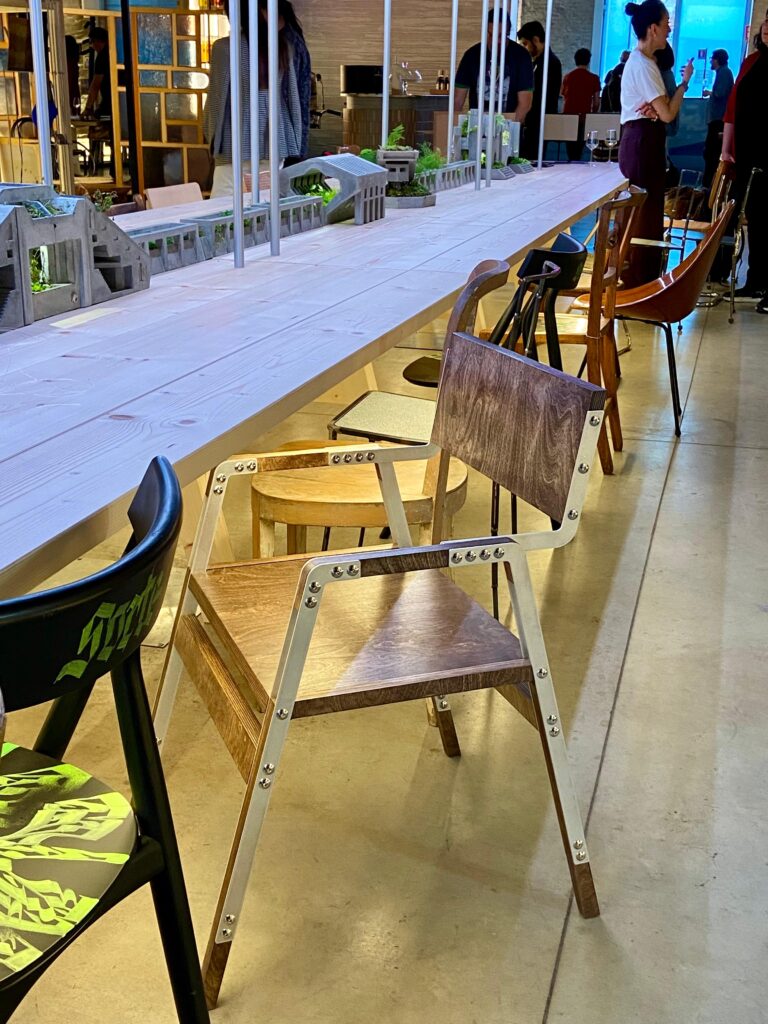
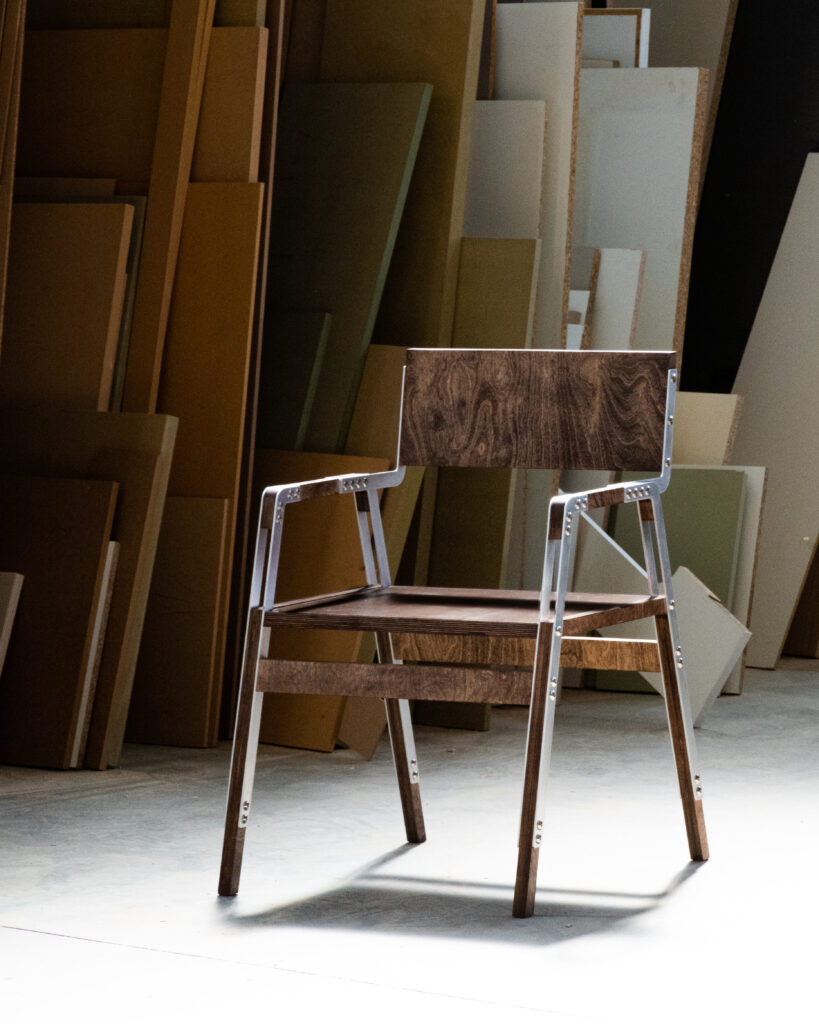
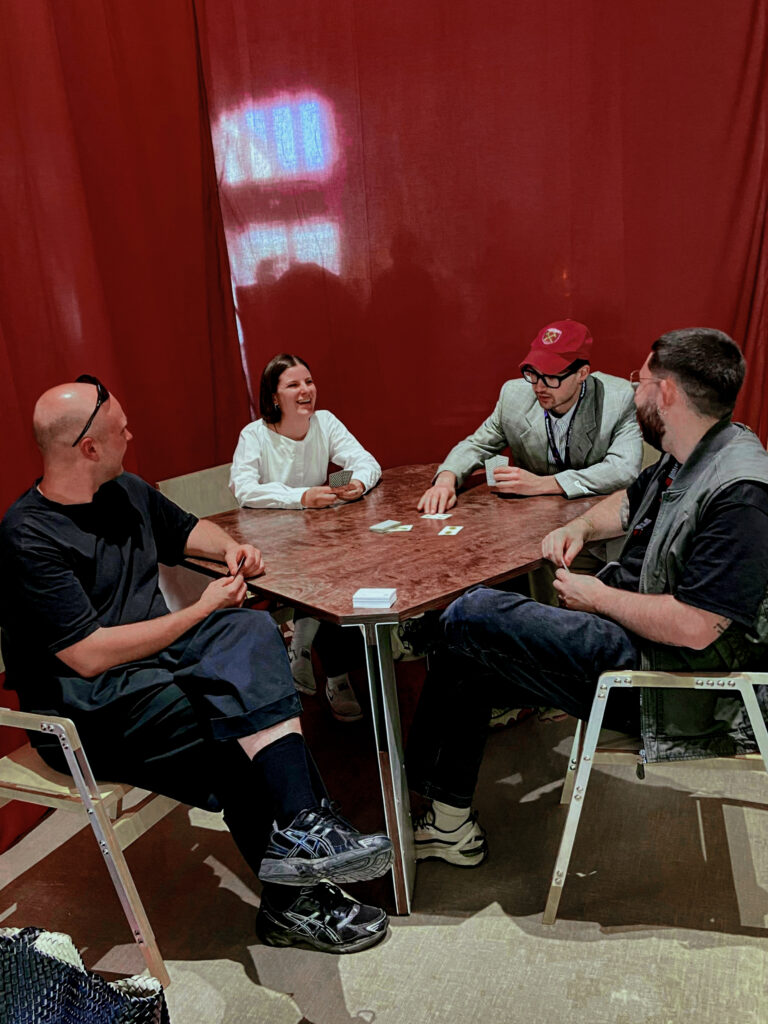
At the core of the collection is a precise conceptual shift: the use of empty space as a structural material. With the Limbo Dining Table and Limbo Dining Chair, volume is reduced to its essential boundaries—mass is deconstructed, and what remains is a system of relations between elements. Structure becomes the project itself.
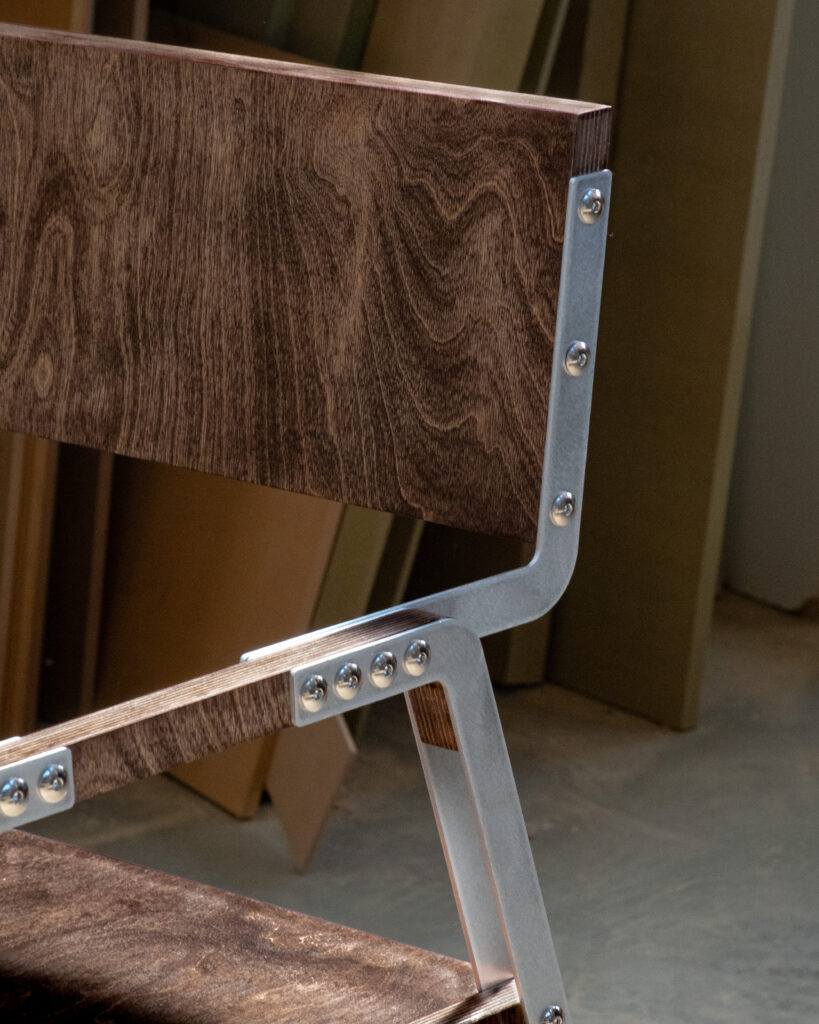
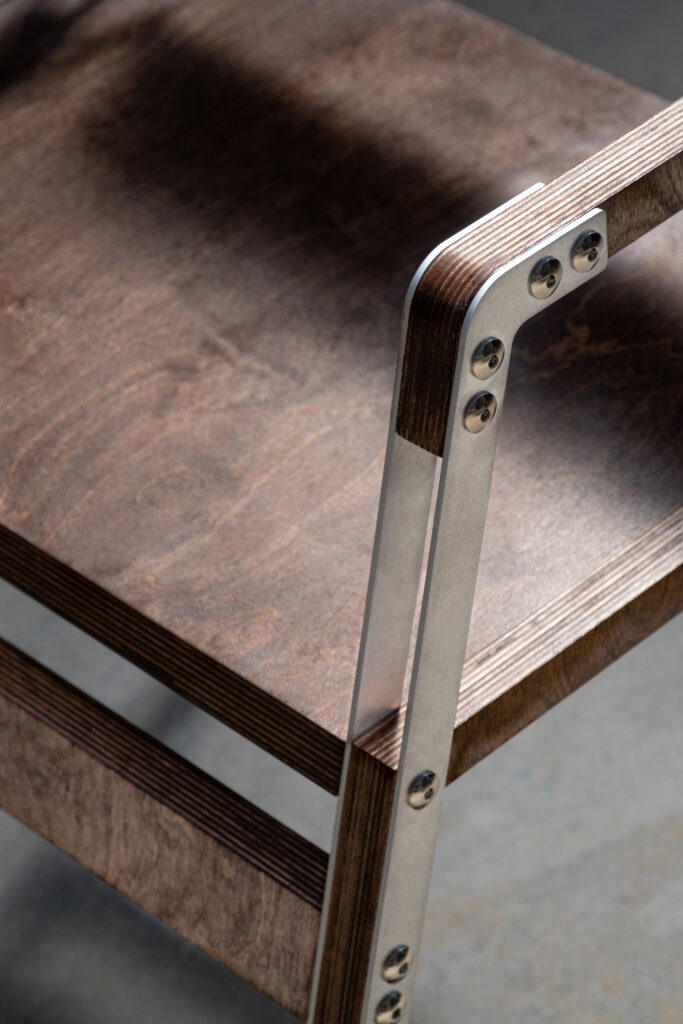
The dialogue between tobacco-tinted birch plywood and hand-brushed aluminum introduces a new material tension within Bena’s practice. Wood and metal are not layered, but reciprocally define each other—balancing warmth and precision, opacity and reflection.
Limbo is driven by a rigorous approach: subtracting rather than adding, embracing the void as a design tool. The result is a series of pieces that reject narrative excess, focusing instead on proportion, balance, and the clarity of construction.
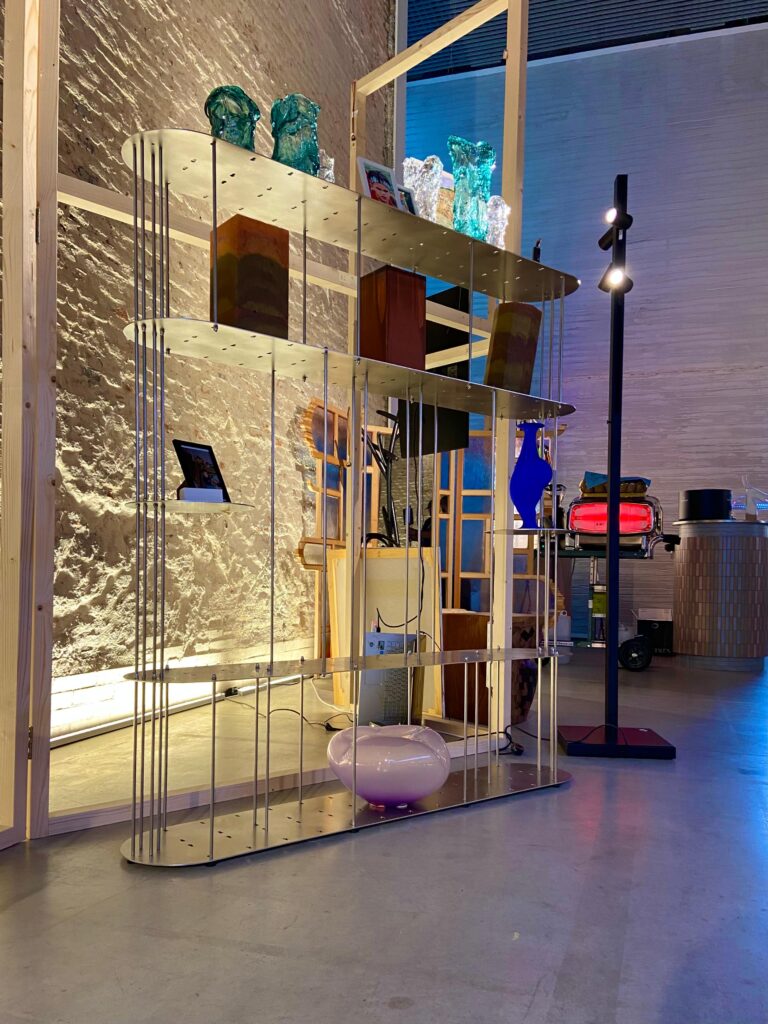
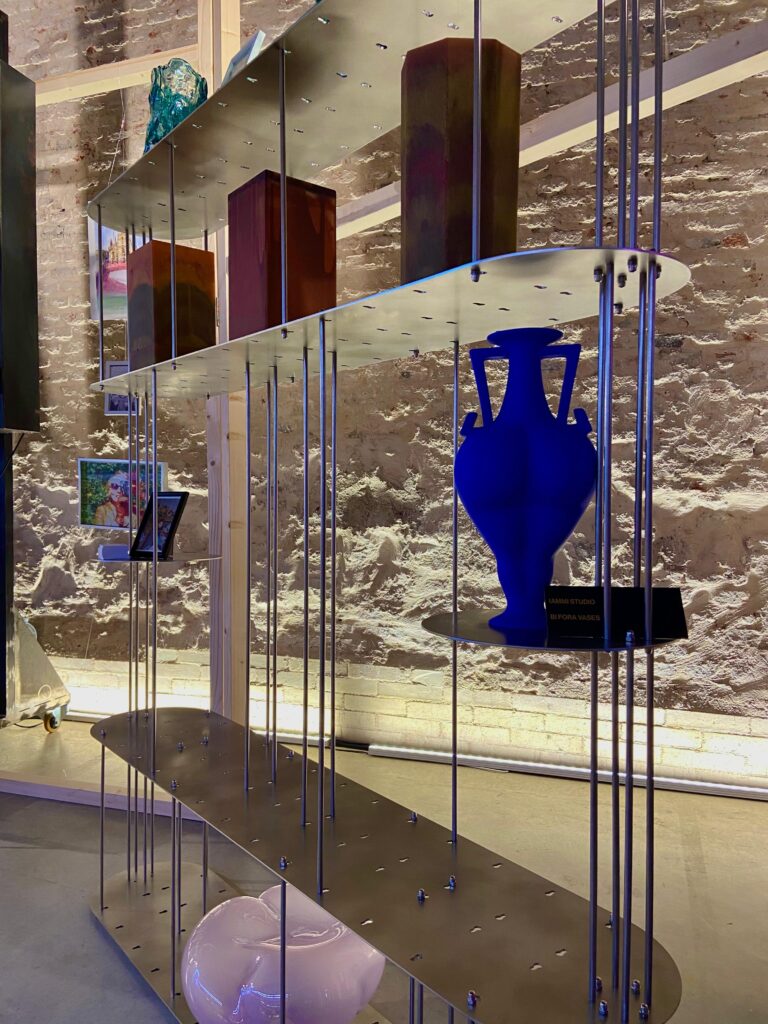
This new direction builds on the foundation established with the Lockwerk collection. Developed during Bena’s early independent practice, Lockwerk explores stainless steel through an explicit construction logic—where screws, bolts, and joints are not concealed but emphasized.
Objects such as the Lockwerk Lounge Shelf—awarded “Best Unreleased Product” at EDIT Napoli 2023—define an aesthetic that oscillates between industrial rigor and a form of restrained brutalism. A language where technical elements become compositional features.
Across both collections, a consistent vision emerges: design as an act of reduction and precision, where every joint, every void, and every material transition contributes to the definition of the object.
CCONTINUA + MAMT — Ceramics as Narrative Systems
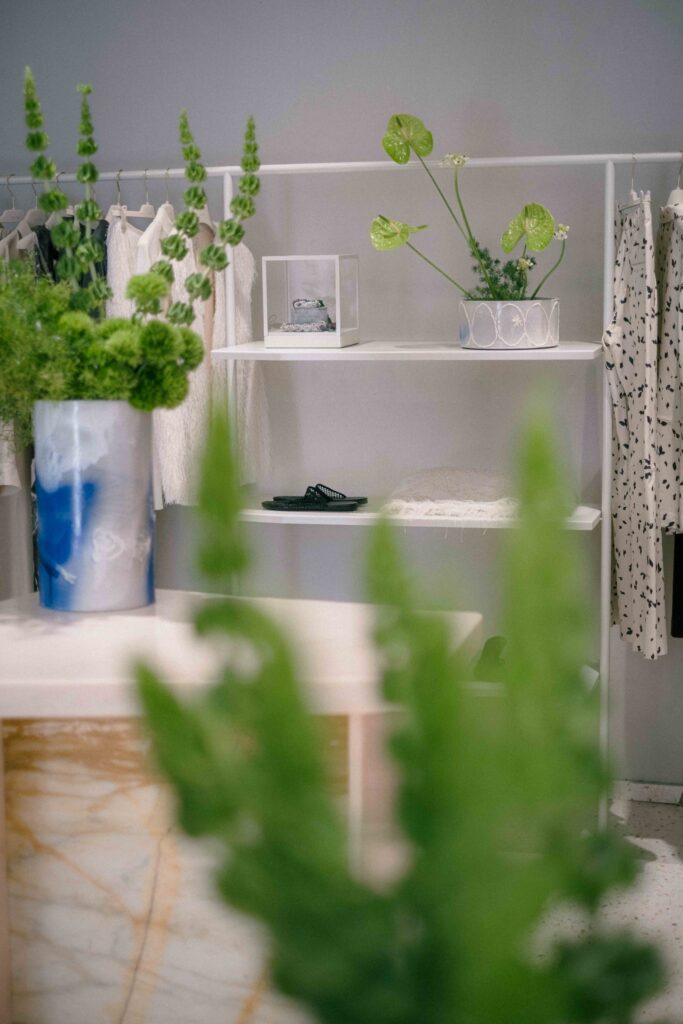
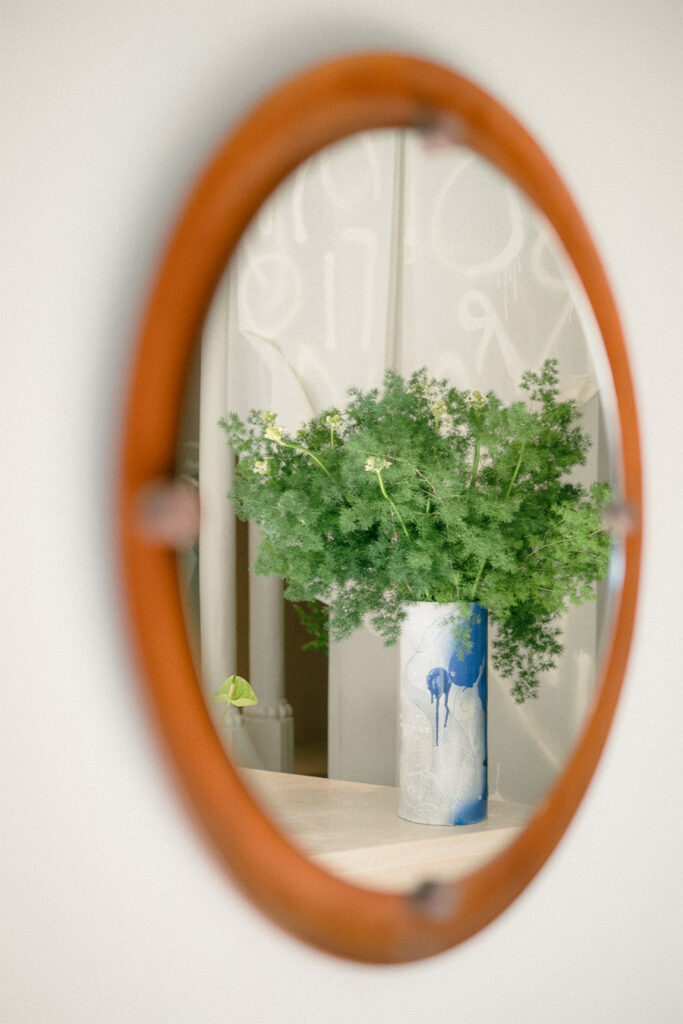
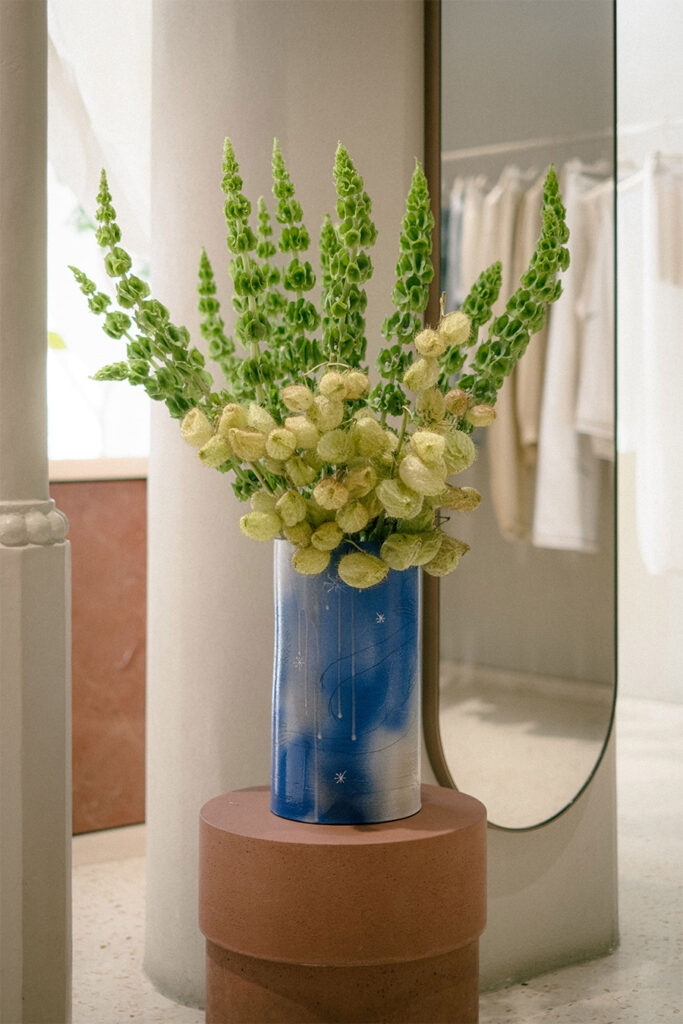
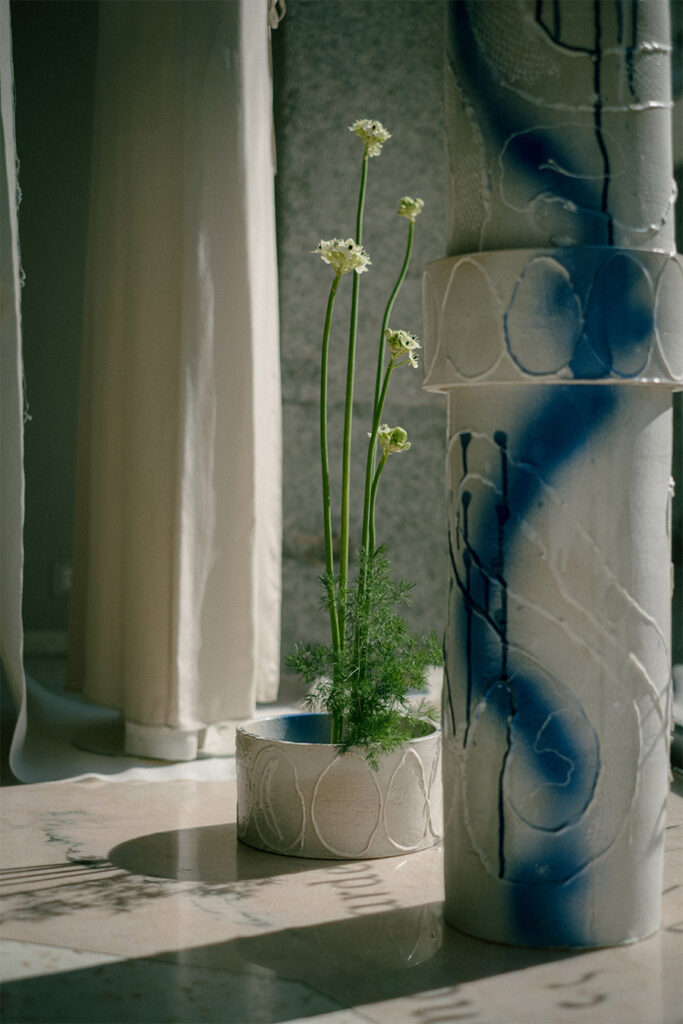
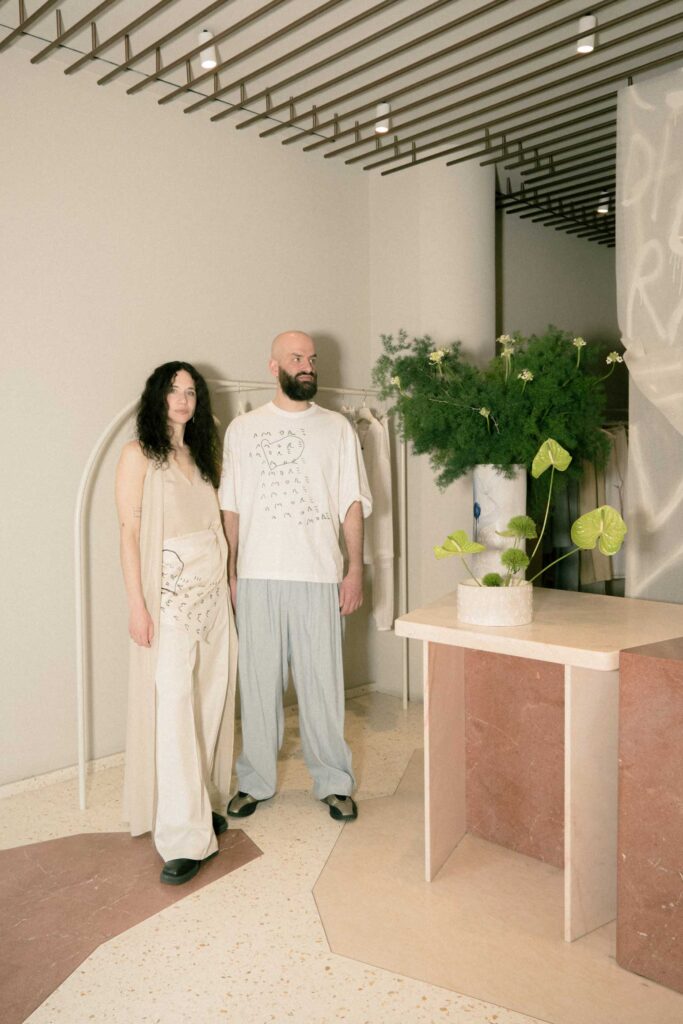
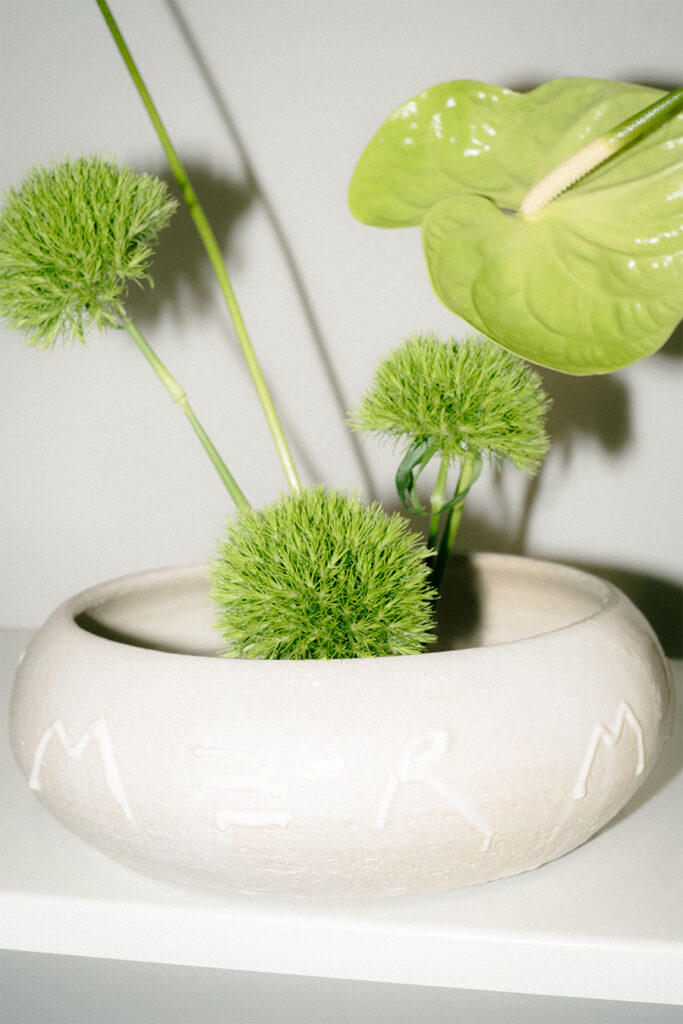
CCONTINUA+MAMT presented The Mermaid Garden, a site-specific project developed for Alysi that positions ceramics as a medium for storytelling and spatial construction.
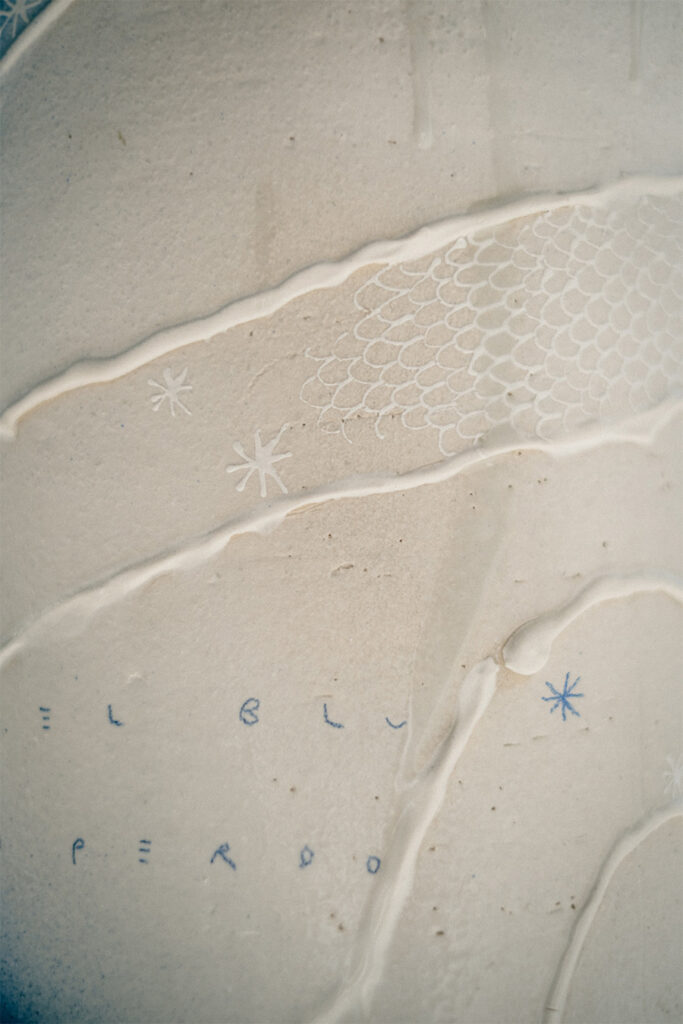
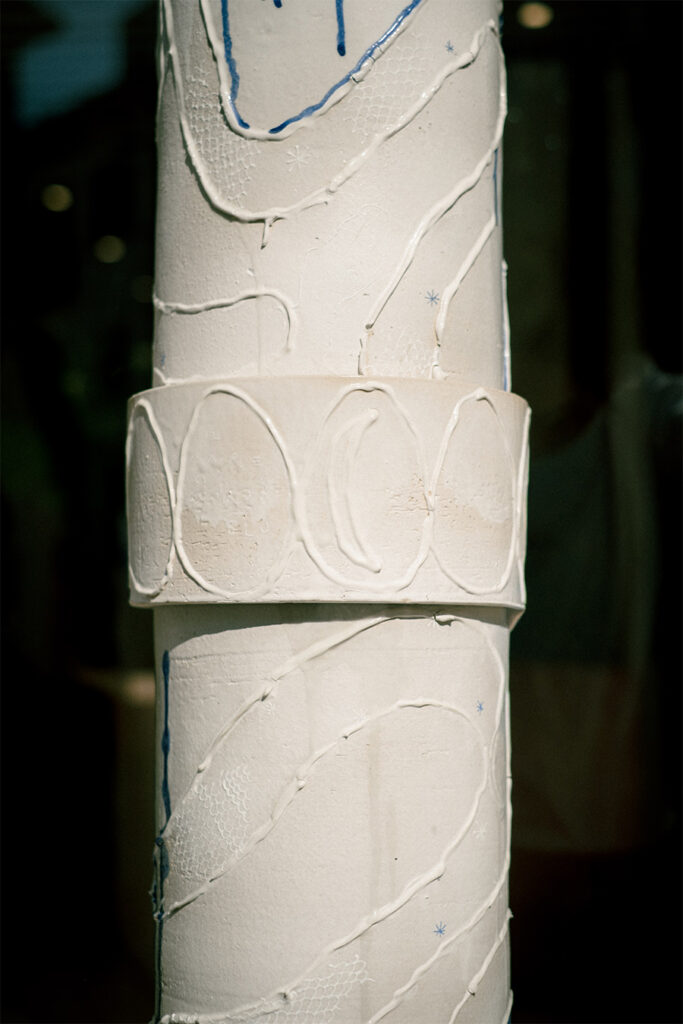
Conceived as an immersive environment, the installation unfolds through a constellation of ceramic objects that operate as narrative bodies—forms that merge symbolism, texture, and material presence. Drawing from the layered iconography of the mermaid, the project explores themes of transformation, hybridity, and identity, translating myth into a tactile and contemporary language.
Vases and sculptural elements become porous surfaces, hosting organic references, signs, and chromatic variations. Developed in collaboration with Albasser Studio, the integration of floral compositions introduces a temporal dimension, transforming the objects into living systems that evolve over time.
Rather than discrete pieces, the works function as interconnected presences within a fluid landscape, where light, shadow, and color contribute to a suspended, almost cinematic atmosphere. Myth is not treated as decoration, but as a conceptual framework that informs both form and perception.
Through this project, CCONTINUA + MAMT expand the role of ceramics beyond object-making—defining a practice where matter carries narrative depth, and where space becomes a platform for continuous transformation.
Giovanni Botticelli × Aina Kari — Between Glass, Light, and Architecture
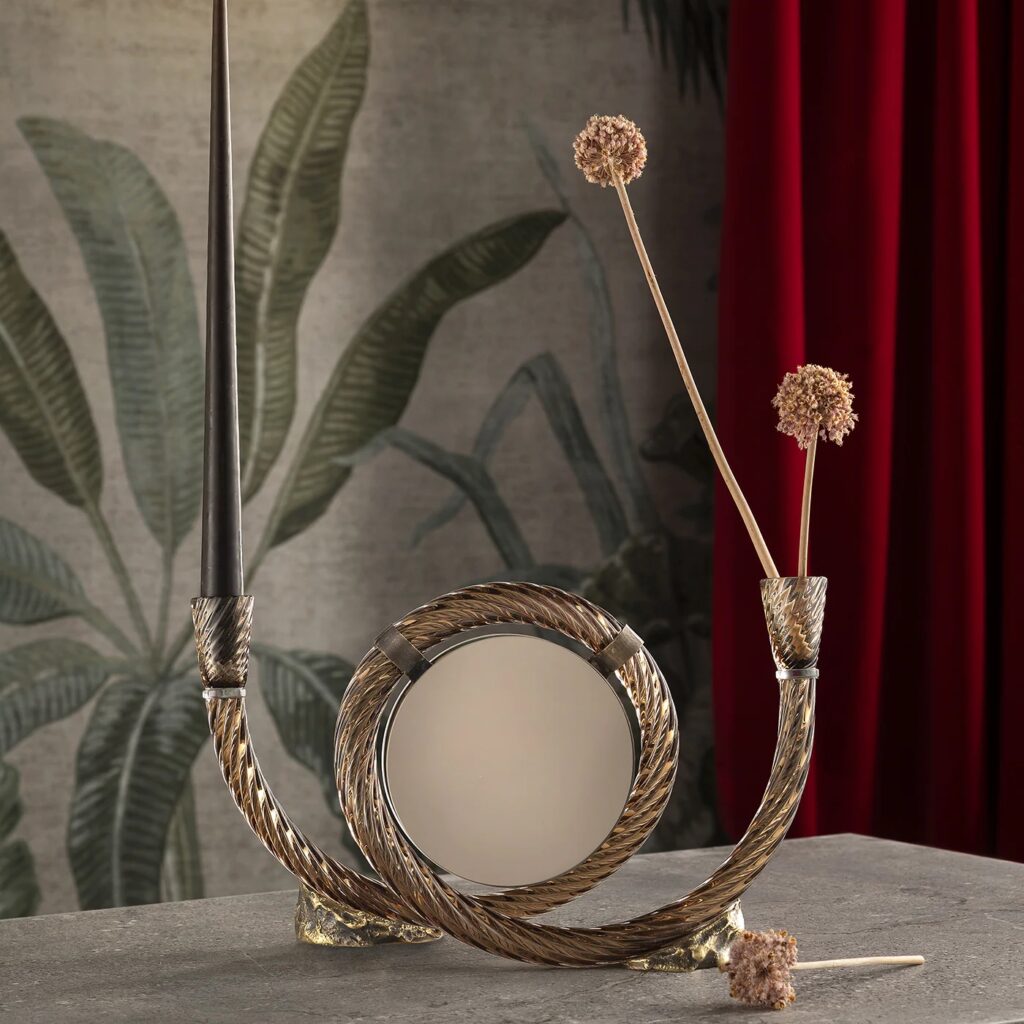
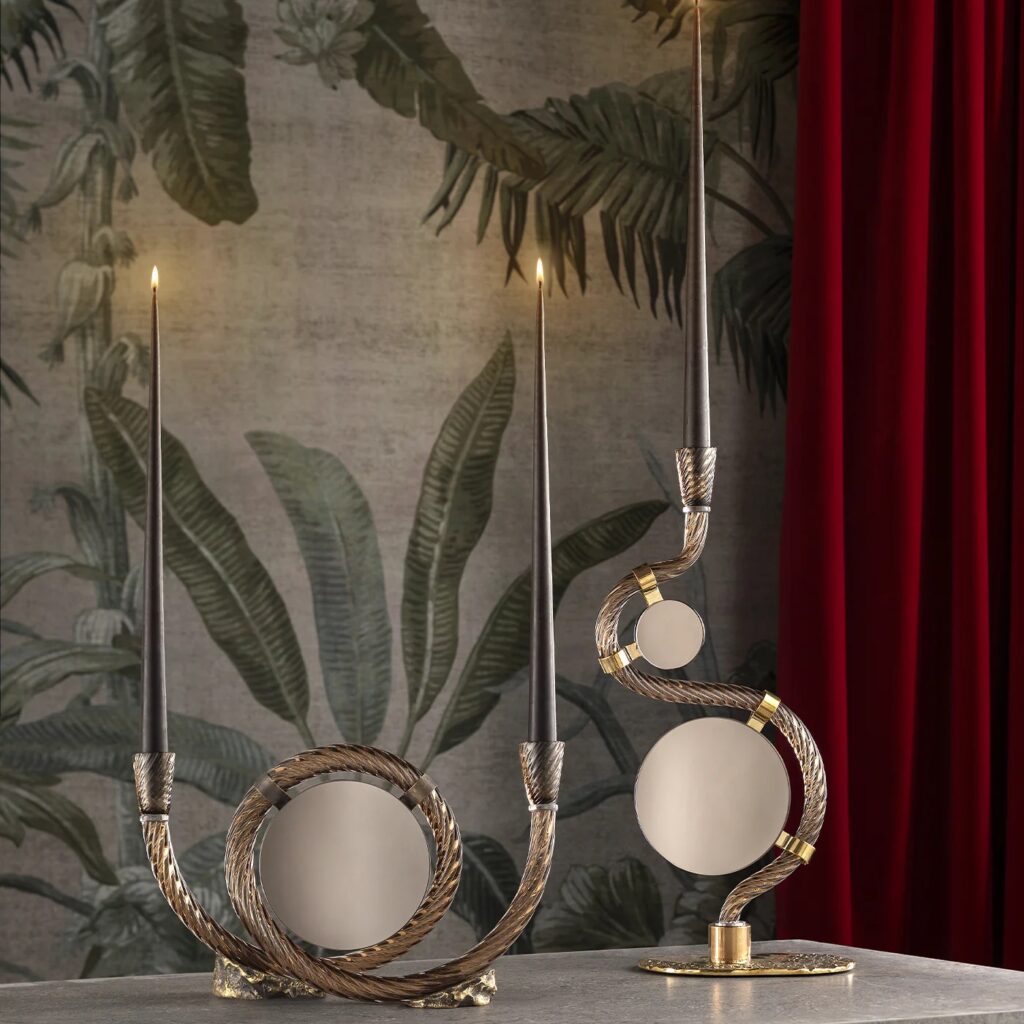
At Artemest’s L’Appartamento, Giovanni Botticelli collaborated with Aina Kari on a series of glass and mirror objects that reinterpret Venetian architectural imagery through material precision and reflective composition.
The San Marco candle holder combines Murano glass in a deep coffee tone with mirrored surfaces, creating a layered object in which light is fragmented and recomposed. The interaction between transparency and reflection becomes the defining design principle, transforming a functional object into a perceptual device.
In The 4 Bridges over Canal Grande, the double-face candle holder translates Venetian urban structures into a compact architectural object. The four bridges are abstracted into a rhythmic geometry, where glass and mirror operate as narrative surfaces rather than decorative elements.
Presented within the curated domestic landscape of L’Appartamento, the collection positions glass not as ornament but as spatial instrument—capable of reframing architectural memory, modulating light, and constructing intimate visual thresholds between object and environment.
Feel free to contact us for any additional information.
See you soon!